Earthling In The City
Tracks: 1.Little Wonder(3:44)LIVE 1/9/97 2.Seven Years In Tibe(3:59)Edit 3.Pallas Athena(8:20) LIVE,Amsterdam 6/10/97 4.The Hearst Filthy Lesson(5:03)LIVE 1/9/97 5.Telling Lies(5:12)Paradox Mix by Gerald 6.Seven Years In Tibet(3:58)Mandarin Version Issued in a flat cardboard slip-case, GQ Magazine, November, 1997.
How The Grinch Stole Christmas
Albert Hague
The Grinch is the Darth Vader of our sugarplum visions. With Boris Karloff reading the beloved fable, generations of kids have been enthralled to hear the tale of how the Grinch almost ripped off the odd folks of Whoville by taking their presents and plundering their decorative booty with help from his hapless dog. And yet he can't dash Whoville's spirit. With songs from the show, including that timeless ode to nastiness "You're a Mean One, Mr. Grinch," this colorful compact version of the story belongs in every seasonal collection. —Martin Keller
See Heart See Muscle
Amplifico
Diva
Annie Lennox
Although traces of her synthpop roots certainly showed through, Annie Lennox's solo debut, Diva, made it abundantly clear that her new material would veer away from gender-bending robotics of the early Eurythmics sound and continue toward the more emotionally grounded soul of later releases. On Diva, Lennox infuses each song with tenderly perceptive lyrics, hypnotic rhythms, and irresistibly soulful wailings. Her arrangements are clean and simple, utilizing bare instrumentation and sometimes-languid chord work. The singles "Walking on Broken Glass," "Little Bird," and "Why" became radio mainstays, while gems such as the Eastern-influenced dream ballad "Primitive," the hauntingly autobiographical pop-lament "Legend in My Living Room," and the cheerfully satirical "Keep Young and Beautiful" gave the album a plump maturity. —Sally Weinbach
Medusa
Annie Lennox
Post-Beatles, the virtues of deft song interpretation have been consistently devalued in favor of self-contained composer-performers, seldom more so than in the initial response to this sequel to Annie Lennox's triumphant solo debut, Diva. That album's gripping originals deserve acclaim, but the lush Scottish alto remains one of the most riveting pop singers of the past two decades, and this smartly chosen, meticulously arranged collection of cover versions boasts its own abundant charms in her selection of obscure gems and bona fide classics from Al Green, Procol Harum, Neil Young, the Clash, the Temptations, Paul Simon, Bob Marley, and the Blue Nile. The songs are the rightful stars here, and Lennox brings passion and nuance to a set that plays beautifully. From the cinematic heartbreak of "No More I Love Yous" to the faithful recreation of the Blue Nile's "Downtown Lights," this is ravishing pop. —Sam Sutherland
Bare
Annie Lennox
Annie Lennox's first album of original songs in 11 years on is a stylish tour de force that showcases the former Eurythmics chanteuse in all her chilly, shimmering splendor. Her formidable voice is still a supple and intriguing instrument, lithely shape-shifting between emotions, personas, and musical forms. Lennox moves effortlessly from the sparse and pristine lament of "A Thousand Beautiful Things" to the deceptively simple "Pavement Cracks," a solemn ballad that is transformed by electro dance beats that recall some of the best of the Eurythmics. But Lennox's quixotic voice is best utilized as an old-school soul instrument; she makes a metaphoric journey to Motown on "Hurting Time," a reflective ballad could have been lifted off a Miracles album. "Honesty," shows the Scottish diva at her well-mannered best, occupying the same sophisticated space formerly held by Carly Simon. —Jaan Uhelszki
3O Greatest Hits [Best Of]
Aretha Franklin
2 sound discs : digital ; Contents: I never loved a man (the way I love you) (2:47) — Respect (2:26) — Do right woman, do right man (3:15) — Dr. Feelgood (3:18) — Save me (2:20) — Baby I love you (2:39) — (You make me feel like) A natural woman (2:37) — Chain of fools (2:45) — Since you've been gone (2:18) — Ain't no way (4:12) — Think (2:15) — I say a little prayer (3:30) — The house that Jack built (2:18) — See saw (2:42) — The weight (2:52) — Share your love with me (3:16) — Eleanor Rigby (2:35) — Call me (3:47) — Spirit in the dark (3:59) — Don't play that song (2:48) — You're all I need to get by (3:34) — Bridge over troubled water (5:31) — Spanish Harlem (3:32) — Rock steady (3:12) — Oh me oh my (I'm a fool for you baby) (3:39) — Day dreaming (3:58) — Wholly holy (5:30) — Angel (4:26) — Until you come back to me (3:26) — I'm in love (2:48).
3 Years 5 Months & 2 Days in the Life of—
Arrested Development
With their feel-good humanism, uniquely rural perspective, and melodic blend of funk and rap, Arrested Development seemed like the next big thing in 1992. The group hailed from Atlanta, which was not then a capital of hip-hop and R&B, and this, their debut recording, won the Village Voice's Pazz & Jop critics poll. Speech, the primary lyricist, wrote and delivered eloquent attacks on gangsta rap's mindless nihilism: the band's first hit, "Tennessee," spoke of reclaiming Southern black traditions from the racism that sullied their memory, while their second, "People Everyday," deftly updated the Sly Stone classic. Although Speech's rapping style was not distinctive, Dionne Farris's keening vocals highlighted the band's front line. Unfortunately, Speech began to run short of ideas and the band failed to maintain the high standards that this debut set. They disbanded a few years later. —Martin Johnson
Cosmic Thing
The B-52's
Nirvana made a lot of things irrelevant when Nevermind was released in 1991. Among the most unfortunate casualties caught inside the blast radius were the B-52's. Just two years prior, they had released their very first mainstream breakthrough album, Cosmic Thing. This album was featherweight, sun-kissed, playfully pansexual and, most importantly, danceable. Tracks like "Love Shack" and "Roam" reminded us there could be fun without responsibility. Alternately kitschy and lazy (I still insist that "Deadbeat Club" was a slacker anthem long before Beck's "Loser"), Cosmic Thing took the B-52's signature Trekkie-camp sensibility and slowed it down just enough to click on MTV and portable radios wonderfully. And let's be honest, anyway: would you rather road-trip to Kurt's sad refrain of "Well, whatever, nevermind" or Fred Schneider belting out, "The whole shack shimmies!!" at the top of his lungs? On second thought, don't answer that. —Todd Levin
Good Stuff
The B-52's
Minus Cindy Wilson this is marginally less cosmic than its multi-platinum predecessor. Still, there's plenty of delicious absurdity ("Is That You Mo-Dean"), Seventies camp ("Hot Pants Explosion"), serious romance ("Revolution Earth") and a tune ("Good Stuff") that frankly celebrates the wild thing. Let's not be stingy: this is great• stuff. —Jeff Bateman
Christmas Celebration of Hope
B.B. King
Now that Charles Brown is gone, it's up to B.B. King to uphold the blues for Christmas. If this first collection of holiday music is any indication, he deserves his own igloo in the North Pole. Self-produced with his touring band in New Orleans during a spring heat wave, A Christmas Celebration of Hope finds King overcoming both the heat and Yuletide music clichés, turning out an inspired and rollicking album that is lit from within by King's generous spirit and gracious heart. Like others before him, King dipped into the blues and R&B holiday canon, but instead of just recycling well-worn classics, he plucked gems like "Blues Decorations" and "Backdoor Santa" out of obscurity and polished them to a high gloss. When King does cover standards, like "Merry Christmas, Baby" and "I'll Be Home for Christmas," he imbues them with his own earthy personality and sleek, restrained playing. King also includes two originals in this surprise package: "Celebration," which he first released in 1960, and the new instrumental, "Christmas Love." This record not only will make Christmas merrier for the listener, it will also help people suffering from cancer, HIV/AIDS, and diabetes, as King has donated the proceeds to the City of Hope, the world-renowned biomedical research and treatment center. —Jaan Uhelszki
Greatest Hits
Bangles
The Bangles' transformation from Merseybeat and garage-smart guitar band to near-definitive example of buffed-and-polished corporate popsters is one of the great rock mysteries of the '80s. What was up with that video for "Walk Like an Egyptian," anyway? Greatest Hits puts it all in perspective, tracing the curve from the post-Beatles group sneer of "Hero Takes a Fall" to the deadly earnest Susanna Hoffs showcase of "Eternal Flame." Shortly after that ballad hit No. 1, the group split. Now unfairly remembered as little more than space fillers on turn-of-the-decade airwaves, the Bangles here make a good case for their spirit, their own songwriting gifts, and, of course, those voices. —Rickey Wright
Rock Spectacle
Barenaked Ladies
The band's goofy charm and sure-footed melodic sense is in full flower here, and the singalongs on "Brian Wilson" and "If I Had $1000000" are proof of the bond between band and audience. A hidden rap tribute to Ed Robertson's "Uncle Elwyn" is vintage Bill Cosby. —Jeff Bateman
Stunt
Barenaked Ladies
The Ladies have done more than lie in bed the way Brian Wilson did; they've spent some quality sandbox time mastering the intricacies of catchy pop records, hooks and all. Sounding at times like Crosby, Stills, Nash & Young after a week in the Caribbean, the Ladies mix a dash of rap with a pop backbeat on "One Week," while "It's All Been Done" is classic 1960s Top 40, right down to the "woo-hoo-hoo" backing vocals. The lyrics are the hidden joy on this record, with lines like "I love you more than I did the week before I discovered alcohol" and the male voice singing about tying his pantyhose around his neck. The songs are well crafted and the production flushes out the Ladies' hidden musical talents, resulting in their best effort since Gordon. —Katie Sigler
Let It Be... Naked
The Beatles
Bette Midler - Greatest Hits-Experience the Divine
Bette Midler
From her early days in the bathhouses to her rise as the star of her own concert film, Bette Midler has always brought a campy playfulness to her performances. Experience the Divine focuses on her radio hits for the bulk of its resources, although the kicky "Boogie Woogie Bugle Boy" is here. Midler's voice easily adapts itself to the material she's performing: "When a Man Loves a Woman" is charged with a raw sensuality whereas "In My Life," is as tender as a lullaby. The recent standards are here, "From a Distance" and "Wind Beneath My Wings," along with her star-making turn, "The Rose." Whether she's handling Cole Porter ("Miss Otis Regrets") or the Beatles, Bette Midler's voice is dynamic and expressive, according to the needs of the song. This astute ability to interpret without always going for the kill makes her versions of her chosen material some of the best ever recorded. —Steve Gdula
Found Treasures
Blood Sweat & Tears
Four
Blues Traveler
This fourth album from the New York's Blues Traveler finally brought their harmonica-based blues riffs into the public eye. Indeed, "Run-Around" spent nearly a year on the Billboard singles chart. Harpman/vocalist John Popper moves easily between uptempo, rock-based tracks like "Stand" and "Crash Burn." The hidden gem here, however, is the love-struck ballad "Just Wait." Often categorized with post-Dead jam acts such as Phish, BT isn't immune from performance excesses. But when it comes to recording, they keep it (mostly) concise and always interesting. If you've heard the name and want to know what all the hoopla is about, Four is a great starting point. —Alexandra Russell
Beautiful Loser
Bob Seger
Bob Seger Photos
More from Bob Seger
Smokin' O.P.'s
Nine Tonight
Face The Promise
Greatest Hits
Greatest Hits 2
Night Moves
Luck of the Draw
Bonnie Raitt
As its title makes clear, the 1991 sequel to Bonnie Raitt's platinum breakthrough on Nick Of Time takes nothing for granted. Raitt had achieved sobriety, renewed commercial focus, and then the payday that the prior album yielded, but Luck Of The Draw mirrors an even fiercer determination to make music as if her life depended on it. Again teamed with producer Don Was, Raitt surpasses herself with her best album to date: her wonderfully lush, blues-rimmed voice and sinuous slide guitar wrap themselves around a dozen potent songs culled from a typically shrewd mix of writers including Paul Brady, John Hiatt, Bonnie Hayes, Shirley Eikhard, and Billy Vera, and Raitt herself turns in her most generous batch of originals yet. Sympathetic guests include Brady and Delbert McClinton on harmony vocals, Richard Thompson on guitar, and Heartbreaker Benmont Tench on organ, in a program including the sassy "Something to Talk About," the sultry "Slow Ride," a soaring "Not the Only One," and the heartbreaking "I Can't Make You Love Me." This isn't luck, it's artistry. —Sam Sutherland
Longing in Their Hearts
Bonnie Raitt
Like its two multiplatinum predecessors, Longing in Their Hearts was produced by Don Was (Raitt is listed as coproducer on the last two) and features the funky rhythm section of ex-Neville Brothers bassist Hutch Hutchinson and ex-Beach Boys drummer Ricky Fataar. As before, Was provides a sympathetic blend of roots rock and radio-ready L.A. pop-rock for Raitt's always-lustrous voice. And yet too many songs on this album just sit there like wallflowers at the juke joint, without enough melody or personality to get the party started. —Geoffrey Himes
Road Tested
Bonnie Raitt
A sense of self-confidence permeates Road Tested. If the '70s were marked by promise and the '80s by disappointment, the '90s, thanks to three smash studio albums, have been sheer triumph for Raitt, and she sounds damned satisfied. Her first live recording after 24 years in the business, Road Tested is an all-things-to-all-people effort, unsurprising given its creator has become all things to an awful lot of people. Steadfast favorites, '90s hits, and fresh additions to her repertoire are spiced by guest appearances by Bruce Hornsby, Ruth Brown, Charles Brown, Jackson Browne, Kim Wilson, and Bryan Adams. Raitt is in fine voice, her playing is great, and the band is solid. What's missing? Maybe some of that vanquished brashness and desperation. —Steve Stolder
The Martyr Mantras
Boy George
BoyGeorgeDJ.Com
Boy George
Boy George takes you on a 38 track, 2 1/2 hour musical journey. Personally selected by George, the eclectic track listing encompasses uplifting trance, rolling progressive beats, classic dancehall reggae & chilled Ibiza anthems. Artists include DJ Tiesto, Lock & Burns, Stylus Trouble, Lurezia, Kinky Roland, Orien, Hairy Diamond, Sunkids feat. Chance, The Kamaya Painters, Meat Katie, Groove Armada, Kinobe, Beanie Man & 7 feat. Ramona Keller. Standard jewel case in a slipcase. 2001.
Last Splash
The Breeders
For her second full-length Breeders album, Kim Deal jettisoned Tanya Donelly, brought in her sister Kelley as lead guitarist (despite the fact that she could barely play when she joined), and came up with a disc full of fun, toothsome rock, not least of which was the mammoth summer-of-'93 hit "Cannonball," a celebration of mosh-pit bounce and purred innuendo. Deal's voice is coy, but the band's full of dreamy energy, rocking like her old band the Pixies without their abrasion, tomboyish rather than macho. Not everything on Last Splash is fully fleshed out as a song, but even the more fragmentary pieces—the embittered punk mutter of "I Just Wanna Get Along," the horny daydream "Divine Hammer"—speed the album's flow. —Douglas Wolk
Electriclarryland
Butthole Surfers
These Austin punks spent a decade playing underground clubs and sleeping on floors next to the cat-litter box before scoring an unlikely commercial breakthrough with this 1996 album. The key to the highway was the modern-rock radio hit "Pepper," a novelty rap tune that reinvents Lou Reed's "Walk on the Wild Side" from the perspective of postpunk nihilism, Texas-style. Another rock-rap track, "The Lord Is a Monkey," grafts a lyrical nod to Snoop Dogg over a mutilated Jimi Hendrix guitar lick. The rest of the album alternates pop-punk rave-ups ("Ulcer Breakout," "Ah Ha") with noisy acid freak-outs ("My Brother's Wife," "Space"). The Buttholes have not released an album since Electric Larryland. But it's all right, Ma, they're only bleeding. —Rick Mitchell
Gonna Make You Sweat
C+C Music Factory
The two singles "Gonna Make You Sweat (Everybody Dance Now)" and "Things That Make You Go Hmmmm...." certainly do the trick. They are powerful dance-pop tracks with a serious hip-hop trunk deep enough to support (almost) the rest of the album, which is a bit of a motivational cool-down. The singles will pack the dance floor, and although the rest of the tracks won't clear it entirely, this album does prove to be unbalanced in the get-up-on-your-feet department. —Beth Bessmer
In Search Of Angels
Cambridge The Choir of Trinity College, Wim Mertens
Believe
Cher
New Cher Single.contains: Almighty Definitive Mix & Xenomania Mix.
Believe
Cher
Cher's recording career has long taken a back seat to her acting pursuits, but with Believe she's back with a vengeance as a throbbing disco diva. Although no fewer than five producers with dance pedigrees are along for the project (including Todd Terry, Junior Vasquez of Madonna fame, and Rob Dickins, who helped resurrect Rod Stewart's ailing career), this is by no means a dance album in the '90s trip-hop sense of the term. Rather, it's a tour de force that summons mid-'70s images of strobe-lighted dance floors, sequined miniskirts, and writhing bodies. In "Power," Cher wails, "Ain't nothing changed much through the years." Not a bad thing in this case, since Cher's star was still rising in the steamy '70s and '80s with a string of hits that included the disco gem "Take Me Home" and the haunting "If I Could Turn Back Time." Although not blessed with much vocal range, Cher knows how to work a song with her trademark sultry, slightly ironic delivery. And she's certainly in fine form on the masterful title track, which is marred only by the intrusive, anachronistic wah-wah vocal effect. —Jaan Uhelszki
Living Proof
Cher
If the fans who grooved to Believe still clamor for more, there's little doubt that Living Proof will quickly achieve the same chromatic status as Cher's new hair color. The multitalented entertainer is placing a safe bet on the fortitude of her latest incarnation as disco diva to support a second album of dance club tracks. Other pop femme fatales of late are experimenting with subtleties in rhythm and nuance, but subtlety is not one of Cher's selling points. She's been quoted as comparing "Song for the Lonely" to U2's sound; indeed, through Cher's discofied ears, there are brief moments where the track riffs on U2's euphoric "Beautiful Day" and the two songs share a hopeful sentiment. "Love So High" and "Body to Body, Heart to Heart" throw the prerequisite Latin guitar and percussion into the mix, and the buzzing back beats on her cover of "Love One Another" (last heard on Dutch singer Amber's self-titled release) make it one of the CD's tightest songs. Cher's vocals—a taste we've had more than 35 years to acquire—are strong, and her production team enhances her limited range with studio tricks. Living Proof will appeal more to Cher's devoted fans than electronica purists, but her missive is relished by both sects: leave your worries at the door and get out on the dance floor. —Beth Massa
Zoot Suit Riot: The Swingin' Hits of the Cherry Poppin' Daddies
Cherry Poppin' Daddies
One of a handful of pop groups in the latter half of the 1990s to exploit the renewed interest in American roots (swing, big band, soul) music, this Eugene, Oregon ensemble scored big with a neat modern update of the old school. Purists take note: Cherry Poppin' Daddies built a following by touring with third-wave ska outfits like Mighty Mighty Bosstones and Reel Big Fish, prompting main Daddy Steve Perry to wryly call his group "third-wave swing." But post-Swingers dance fanatics (rockabilly retro-cats, modern-day sockhoppers, and Royal Crown Revue boosters) don't sweat the particulars. Charged horn arrangements, bouncy rhythms, and saucy verve effectively recall masters like Basie, Cab, and Ol' Blue Eyes while injecting an unmistakable post-punk ethic. —Mark Woodlief
Slowing Down the World
Chris Botti
Whether his trumpet is open or muted, Chris Botti is an artist of the subtlest detail, able to draw an emotion with the briefest phrase. Sometimes even a single note—a sudden high, a muffled half valve, or a burred aside in the lower register—can be telling. On Slowing Down the World, he's consciously invoking the quiet moments, creating limpid pools of melody and reflection. That attention to the nuance of mood is apparent in his solo on "In the Wee Small Hours of the Morning," when he begins with a welling, rising phrase that illuminates the mood created by vocalist Sting. Botti is supported throughout by top-rank musicians like bassist Tony Levin and drummer Peter Erskine, and the London Sessions Orchestra, arranged and conducted by Anna Dudley, creates a plush carpet of sound on four tracks. Bob James contributes his distinctive electric piano lines to "The Open Touch," and Botti sings on Randy Newman's "Same Girl," adding an intimate and plaintive tone that might suggest Chet Baker, who Botti pays homage to on Playing by Heart. —Adam Rains
Night Sessions
Chris Botti
Three of the biggest instrumental pop hits ever recorded were by trumpeters Hugh Masekela, Herb Alpert, and Chuck Mangione. Botti's fourth album comes equipped with more than enough catchy and light melodies to compete with that legacy, but it will probably be "All Would Envy," one of the two vocal tunes on Night Sessions, that will help this disc dent radio and sales charts. It's a song given an irresistible Brazilian lilt by its composer, Sting, who Botti has toured with, and sung hauntingly by Shawn Colvin. Like those aforementioned horn players, Botti does put an emphasis on rhythm on upbeat groove tunes like "Miami Overnight," "Streets Ahead," and especially "Blue Horizon," which has more than a hint of Europe's drum & bass sound, and features killer keyboard work by Billy Childs and album producer Kipper. But it's the Alpert-influenced "Through an Open Window," with its rock guitars and slick melody line that many may consider the hottest track. Most of the other tracks consist of Botti's crisp clear tone cutting through the kind of atmospheric, heavily padded keyboard music that has gotten him on smooth-jazz radio and Hollywood soundtracks. —Mark Ruffin
To Love Again
Chris Botti
Somewhere, Kenny G is hiding behind his cascading ringlets in shame. Chris Botti, a jazz world super-talent whose trumpeting earns frequent comparisons to Miles Davis and Chet Baker, has found the formula for classing up the pop charts, and within it there's not a single soaring sax or tired attempt at career revivalism to be found. What we're treated to instead is an all-star lineup (Sting, Gladys Knight, Michael Buble and others) vocally saluting a musician whose resume reads like a page torn out of the Rock Snob's Dictionary: in addition to touring with Sting, Botti has played sideman to Paul Simon, Natalie Merchant, Joni Mitchell, and dozens more. Here that experience pays off handsomely. Gone are the matinee-idol smooth artist's earlier experiments with jazz synthesizers and pop-fusion compositions (see 2002's Night Sessions for those), and present in their place are his classical instincts. Gil Evans might have been his guide as the unmistakable opener "Embraceable You," one of a handful of instrumental tracks, swirls into the enchanting, ultra-sophisticated "What Are You Doing the Rest of Your Life," for instance, and listeners need not feel like fogies for loving it. If Steven Tyler can sign on to sing along with a traditional arrangement of Charlie Chaplin's "Smile" while the London Session Orchestra lays down its trademark jazz lushness behind him, after all, you can let down your guard long enough to admit this disc leaves you feeling vaguely dreamy. —Tammy La Gorce
Wicked Game
Chris Isaak
1991 release on Reprise featuring 12 of the best tracks fromhis first three albums, including his top 10 1990 hit 'Wicked Game' and an instrumental version of it that is exclusive to this release. Also includes his cover of the Yardbirds' 'Heart Full Of Soul' and early faves like 'You Owe Me Some Kind Of Love', 'Blue Spanish Sky', 'Heart ShapedWorld', 'Blue Hotel', 'Nothing's Changed' and 'Voodoo'.
Gold Afternoon Fix
The Church
Digitally Remastered Classic Album the Australian Band Augmented with a Bonus CD of Rarities and Audio Curiosities.
Perfekt World
Clara Lofaro
Snakehouse
The Cliks
On "Snakehouse", The Cliks have created something mysterious yet transparent; specific yet universal; timeless yet intoxicatingly new. They're a band of such primal power and unguarded emotion that they'll take your breath away. This is music that seems to emanate from a parallel universe, one where fundamental distinctions are blurred, living passionately is the highest level of existence, and rock and roll is the ultimate form of expression.
Vegas
The Crystal Method
When Ken Jordan and Scott Kirkland started distributing homemade singles around Los Angeles at the beginning of the '90s, their bass-fortified, hard-rolling techno concoctions perked up the ears of industry impresarios and local scenesters alike. Vegas, their affectionately-titled major label debut, refines the formula. Thick with layers of pounding beats and rock dynamics, it takes the typical club fare and beefs it up with a uniquely western slant. The detectable influences range from the power chords of AC/DC to old school hip-hop patterns to the smooth melodies of Stevie Wonder. On blistering tracks like "Trip Like I Do" and "Keep Hope Alive," the Crystal Method confirm that America has become a force of contention in the electronica field. —Aidin Vaziri
Storyteller
Crystal Waters
You know that skit from Saturday Night Live, the one where the two guys stand around a nightclub bobbing their heads and trying in vain to pick up women? Right, well this is the perfect disc for their head-bobbing. A slick dance-popper in the same vein as, say, Culture Beat or Haddaway, Crystal Waters kicks off Storyteller with her dancefloor trump-card: "100% Pure Love," as sure a club hit as was released in 1994. The rest is a bit less easily typecast—a few organs and ballads amid all the cow-bells—but it never strays too far from the basic formula: Unabashedly cheesy, and generally better off for it. Ain't no one gonna confuse this with Aphex Twin anyway. —Keven McAlester
At Worst...The Best of Boy George and Culture Club
Culture Club
At best, Boy George and his band Culture Club were a dizzy mix of camp, drag, dub, disco, reggae, and new wave. The androgynous George rhumba-ed his way through hits like "I'll Tumble 4 Ya" and crooned with white boy soul through their reggae classic "Do You Really Want to Hurt Me" as well as the Delta-inspired "Karma Chameleon." At worst, the band had trouble finding direction and the proper vehicles for his smooth voice, producing clunkers like "Church of the Poison Mind." "Move Away" and "Miss Me Blind"—which actually took its chorus from a Japanese whiskey commercial—were Culture Club at their most brilliant. The band knew it wasn't making fine art and rose to the task of crafting flawless pop gems. George's later work didn't have the sense of fun and abandon as his stint with Culture Club, but his remake of "The Crying Game" again demonstrated those soulful pipes. Also worthy of note from his later career is the Krishna-inspired club hit "Bow Dow Mister." —Steve Gdula
Twelve Deadly Cyns and Then Some
Cyndi Lauper
Limited edition Japanese pressing of this album comes housed in a miniature LP sleeve.
Sisters of Avalon
Cyndi Lauper
Nobody took Cyndi Lauper seriously at the outset, and years later there's still a tendency to dismiss her as fluff before hearing note one. That's odd, because her 1990s work is meaty and substantial, a mix of strong writing and chancy musical dice rolls. "You Don't Know" is a challenging single, "Fall into Your Dreams" is a warm-bath ballad, and film theme song "Unhook the Stars" reveals again that she can swim with the current. —Jeff Bateman
Black Sunday
Cypress Hill
If a case can be made for gangsta rap, Cypress Hill is the act to make it. The trio of L.A. Latinos has the commercial clout and its raps are mercifully free of the misogyny, homophobia, and anti-Asian, anti-Jewish racism that so often mars the genre. Member/producer D.J. Muggs creates an eerily lean soundscape of whining sirens, off-kilter funk rhythms, metallic percussion, nasal taunts, and gruff warnings that's the aural equivalent of today's nerve-rattling cop flicks and mob movies. —Geoffrey Himes
Tchaikovsky: 1812 Overture with Chorus; Voyevoda; Sleeping Beauty; Moscow Cantata
Dallas Symphony Orchestra
Dallas Christmas Gala
Dallas Symphony Orchestra
Let's Dance
David Bowie
The Thin White Duke comes out of his shell and decides it's time to dance again, albeit (of course) with a slightly artistic stance. With this record, a whole new post-punk generation discovers the human chameleon, on what is his most extroverted and accessible record since the glam days. The title track was a major hit single, and both "China Girl" (he hadn't forgotten Iggy) and "Modern Love" got lots of airplay. Overall, it was as shiny as a new penny and as friendly as a puppy thanks to help from former Chic-sters and Stevie Ray Vaughan. —Chris Nickson
The Man Who Sold the World
David Bowie
The Man Who Sold the World might be the sleepiest of Bowie's sleepers. It's got some great, quiet moments, like "All the Madmen," with its flutes and violins and midsong poetry reading ("Where can the horizon lie when a nation hides its organic minds in the cellar, dark and grim....") and "After All," which is hauntingly beautiful. It's got songs that are several different songs at once (for example, "Width of a Circle"). What it doesn't have is a "Heroes" or a "Rebel Rebel" or a "Jean Genie" or a "Boys Keep Swinging"—no immediately accessible standout stand-up-and-dancers in the face of experimental weirdness. Instead, this CD kind of stands on you. Its dark, sometimes violent lyrics knock you off your feet, and the frantic, heavy bass lines hold you down. "Don't set me free, I'm as heavy as can be ... give me some good old lobotomy." OK! —Dan Leone
Changesbowie
David Bowie
The 1976 best-of Changesonebowie (slyly named for a Charles Mingus disc issued the previous year) was the Thin White Duke's last major commercial hit of the decade. Collecting famed singles and album cuts from an amazingly fertile period, it clicked both with those who got into Bowie through his mainstream popularity and with the crowd who loved him for his challenge to it. This expanded edition goes forward from "Golden Years," the original closer, with a hopscotch through later radio favorites like "Let's Dance." Flaws? A remixed "Fame '90" that already sounded dated when it was new, and the disc's omission of almost all of Bowie's collaborations with Brian Eno. The upside? A generally smart update of a key compilation. —Rickey Wright
Ziggy Stardust & The Spiders From Mars
David Bowie
Station to Station
David Bowie
Black Tie White Noise
David Bowie
David Bowie: Black Tie White Noise! Original 1993 Release On Savage Records! TRACKS: 1. Wedding; 2. You've Been Around; 3. I Feel Free; 4. Black Tie White Noise; 5. Jump They Say; 6. Nite Flights; 7. Pallas Athena; 8. Miracle Goodnight; 9. Don't Let Me Down & Down; 10. Looking for Lester; 11. I Know It's Gonna Happen Someday; & 12. Wedding Song.
Sound + Vision
David Bowie
Earthling
David Bowie
Shrugging off an uneventful decade of boring, archaic, projects, Earthling returns Bowie to the forefront of contemporary music. While the album has garnered attention for incorporating elements of drum and bass, its most striking feature is truly Bowie himself as he recaptures an edge he hasn't shown since 1979's Scary Monsters. From the addictively danceable "Little Wonder" to the appropriately unnerving "Seven Years in Tibet," the album is full of the genius that made him so remarkable to begin with. As for the loops and samples, it's less a novelty and more Bowie's willingness to open his music to new tools. Granted, it's not as "before its time" as 1974's Diamond Dogs, but acid-laden vocals, hard-edged guitars, and arrangements that constantly border on the edge of chaos all show a pretty striking return to form from an artist who many had written off as a dinosaur. —Bill Snyder
Never Let Me Down
David Bowie
Space Oddity
David Bowie
This 1969 release features David Bowie's first hit single, "Space Oddity," and sets the tone for the spacey Ziggy Stardust to come. But other than the title track, Space Oddity isn't a glam-rock album. For that phase, one must move ahead to 1970's The Man Who Sold the World. These folk-based tracks largely present Bowie as a surrealist singer-songwriter. The uncharacteristically bitter and sarcastic "Letter to Hermione" is the most impassioned track here, presenting, as it does, the angry side of this master of cool. While still earlier recordings are noted for their Anthony Newley affectations, Space Oddity is where the Bowie myth begins to take shape. —Rob O'Connor
Hours...
David Bowie
Hours... is a lush, largely serene self-portrait through which David Bowie atones for mistakes and reflects on regrets. Not that this is the chameleon's swan song, but it's a fitting time for him to speak out honestly about his life—a life that's been lionized, criticized, and mythologized by the masses for three decades. Bowie's Hunky Dory muses were once "driving their mamas and papas insane," but here they are aged and faded ("The Pretty Things Are Going to Hell"); yet the man himself could not be more graceful or vibrant. —Beth Massa
DERAM Anthology
David Bowie
All 27 tracks, in chronological order, that Bowie released on Deram: 'Rubber Band' (Single Version), 'The Lon-don Boys', 'The Laughing Gnome', 'The Gospel According To Tony Day', 'Uncle Arthur', 'Sell Me A Coat', 'Rubber Band', 'Love You Till Tuesday', 'There Is A Happy Land', 'We Are Hungry Men', 'When I Live My Dream', 'Little Bombardier', 'Silly Boy Blue', 'Come And Buy Toys', 'Join The Gang', 'She's Got Medals', 'Love You Till Tuesday' (Single Version)'Let Me Sleep Beside You', 'In The Heat Of The Morning', 'When I Live My Dream', 'Space Oddity' and more!
Reality
David Bowie
CD AUDIO SIDE: Entire Album
DVD SIDE: * Entire album in 5.1 Surround Sound and enhanced LPCM Stereo * The exclusive film Reality * Video performances: "Never Get Old" "The Loneliest Guy" "Bring Me The Disco King" "New Killer Star" * Photo Gallery * Lyrics * Biography * Discography * ROM content/web links This disc is intended to play on standard DVD and CD players. May not play on a limited number of models.
Did I Shave My Legs for This?
Deana Carter
Includes CD, Case, Artwork!! Case tab is broken. Promo CD. Many Minor Scratches. Great Buy! Fast 1st Class Shipping!!
Twisted
Del Amitri
Del Amitri is a straightforward Scottish guitar band that formed partly as a response to bombastic countrymen Simple Minds. The quartet's third album, Twisted, is a strong collection of ultra-melodic rock with more of a Beatles influence than in the past. As usual, the somber lyrics of tunes such as "Food for Songs" and "Here and Now" contrast with the upbeat melodies, hence the "twist" in the title. —Jim DeRogatis
Catching Up with Depeche Mode
Depeche Mode
A singles collection chronicling the band's first five years, Catching Up with Depeche Mode is the perfect primer for would-be fans. The first three tracks feature Vince Clarke's inimitable brand of bubble-gum synth pop, brimming with catchy counterpoint and wonderfully predictable chord progressions. The remaining songs chart Martin Gore's evolution as a composer, his earlier Clarke-esque material gradually transforming into the darker, noisier synth works that characterized mid-to-late-'80s Depeche Mode. The band's other defining elements, i.e. Gore's fragile vocals contrasted with David Gahan's resonant baritone are well represented, although the hits "Everything Counts" and "People are People" are notably absent. —Michael A. Massa
Black Celebration
Depeche Mode
Depeche Mode's most foreboding album, leaning toward the gothic, is DM at their most bleak, black-armband, and nihilistic—no doubt played over and over by countless self-loathing teens as they dyed their hair black behind locked bedroom doors. The tracks are tastefully minimalist, yet the few sounds that dominate each song have a consuming, even overwhelming feel—like a big, heavy black cloud that descends upon and surrounds listeners until their knees buckle from the weight. Rhythmically, songs like "A Question of Time" are driven with moderately paced 16th notes pounded out on synths filling out the low end. Other tracks follow the path of "Stripped," an all-out lamentfest powered by David Gahan's overproduced baritone. —Beth Bessmer
Violator
Depeche Mode
Violator is Depeche Mode's most mainstream, chart-climbing album. Although it contains only nine tracks, half of them are tailor-made for the dance floor. This album was conceived when dance-club DJs were gaining recognition alongside original composers. Heavily influenced by techno-pop, the singles "Policy of Truth," "Enjoy the Silence," and "World in My Eyes" prove that DM did their homework. A particular highlight on this fantastic album is the bluesy guitar line Martin Gore lays down on top of the synth-dominated grooves on "Personal Jesus." —Beth Bessmer
Songs of Faith and Devotion
Depeche Mode
The Singles 86>98
Depeche Mode
So Depeche Mode releases a singles compilation featuring only one previously unreleased song ("Only When I Lose Myself") in anticipation of a major tour. Sound suspiciously like a shameless cash-in? Sure. But The Singles, 86-98 needed to be made. This is a worthwhile purchase for casual admirers and completists alike. The two-disc set contains revamped versions of the major singles from 1986 to 1998 and a version of "Little 15" that was first released only in France. The set's "grand finale" is the live recording of "Everything Counts," from the 101 album. Although the original studio version of the "Everything Counts" single appeared on 1984's People Are People, DM fudged the chronology to justify including this astounding live recording on the album (a ploy to psych up concert-ticket buyers?). The live recording highlights the worshipful crowd applauding, cheering, and chant-singing "The grabbing hands / Grab all they can / Everything counts in large amounts" long after the song has ended. Ka-ching! —Beth Bessmer
Pet Your Friends
Dishwalla
Now in a Minute
Donna Lewis
Produced by Kevin Killen and Donna Lewis. 1996 Atlantic Recording Corporation A Time Warner Company
Decade: Greatest Hits
Duran Duran
Decade is a greatest hits album containing singles recorded between 1981 and 1989 ranging from "Planet Earth" to "Notorious." This CD provides any Durannie a chance to reflect on the transgression the group had made from the stark pop of "Girls on Film" to the New Romantic chariot "Save a Prayer" and finally to the dismal Brit funk embarrassment "All She Wants Is." The album could have been stronger if commercial hits such as "Notorious" were replaced with better songs like "New Moon on Monday." Nevertheless, the purpose of this collection was to display representative songs from each album created before 1989, and in this it succeeds. —Beth Bessmer
Duran Duran
Duran Duran
With the appearance of fashion-oriented acts like Adam Ant, Culture Club, and Duran Duran, the early '80s gave birth to an emerging genre called "new romantic." Appealing to a young, mostly female audience, the Duran gang—named after a character in the kitschy, futuristic Jane Fonda movie Barbarella—helped move U.K. music away from punk and back towards the early-'70s sound of groups like Roxy Music and T. Rex. Fronted by singer Simon LeBon, and anchored by keyboardist Nick Rhodes and guitarist John Taylor, the band made quite a splash with this 1981 debut via the British hits "Planet Earth" and "Girls on Film," whose pornlike video was banned by the BBC, thus helping the band's notoriety. —Billy Altman
Eagles - Their Greatest Hits 1971-1975
Eagles
The pre-Hotel California years were arguably the best for The Eagles (though there were, thanks to Joe Walsh, some stellar future moments). Their mix of country, folk, and rock had a harder, grittier edge, and helped define what would become known as the Southern California sound. There was just enough of a country feel in the beautiful harmonies of "Best of My Love," to blur the edges between the genres. "Take It Easy" and "Lyin' Eyes" could easily have come out of the new Nashville school, as well. The twang that characterizes the guitar intro to "Already Gone" and the leads in "Witchy Woman" and "One of These Nights," also pays tribute to country's guitar greats. Greatest Hits 1971-1975 houses a scant ten singles, but not only does it illustrate the magic of the collaboration between Glen Frey and Don Henley, it shows the breadth of The Eagles impact on the many who would follow their lead. —Steve Gdula
Shooting Rubberbands at the Stars
Edie Brickell & New Bohemians
"What I Am," the leadoff track on Shooting Rubberbands at the Stars, was a left-field hit off this Dallas band's debut album, and it remains about the only thing they're remembered for (excepting Brickell's eventual marriage to Paul Simon). But a good part of this album is quite listenable and stands up reasonably well to the years. "Love Like We Do," "Little Miss S." and "The Wheel" are basically equal to "What I Am" in their rhythmic and melodic pop appeal; "Air of December" and "She" allow the band's more jazz-oriented roots a little room to flourish, and the poignantly personal ballad "Circle" remains the best lyric Brickell has written. It was all downhill from here, but Shooting Rubberbands was an early peak worth revisiting. —Peter Blackstock
Verve Jazz Masters 24: Ella Fitzgerald & Louis Armstrong
Ella Fitzgerald & Louis Armstrong
Reg Strikes Back
Elton John
Big Picture
Elton John
Australian Exclusive Tour Edition. Features a Limited Edition Slipcase.
Songs from the West Coast
Elton John
The appearance of "Rocket Man"-era cohorts Nigel Olsson and Davey Johnstone as backing vocalists touches this CD with one of the trademark sounds of Elton John's 1969-75 LPs. John has acknowledged those records—his most typically singer-songwriterish—occasionally, if mostly to revisit audience favorites in concert (1987's Live in Australia, a late-'90s VH1 show). But on Songs from the West Coast, his admiration of Ryan Adams and Rufus Wainwright (a guest here) inspires him to recall the stripped-down, lyric-driven sensibility of his early days. The tone of the words Bernie Taupin feeds this notorious diva is elegiac, rooted in a wearier version of the romanticism that fueled oldies as diverse as "Your Song," "Love Lies Bleeding," and "Burn Down the Mission." West Coast sidesteps bombast with a couple of exceptions; only "The Wasteland," with its invocation of Robert Johnson, is enough to provoke a dismayed "oy." The standout track is "I Want Love," a Lennonesque rumination that's their most impressive writing, separately or together, in more than a decade. —Rickey Wright
Made in England
Elton John
The Slim Shady LP
Eminem
On The Slim Shady LP, Eminem wants it all. He's conflicted, you see; the world has treated him badly, and he wants to respond in kind. But he isn't a straight-up gangsta—this is, after all, the first release on Dr. Dre's Aftermath Records, his post-Death Row-era venture—and Eminem (born Marshall Mathers) doesn't really want anyone to follow in his footsteps, which leads to some interesting contradictions on this album. In the first single, "My Name Is," he's self-deprecating, rapping about his poor upbringing and his hairy palms. But on the very next song, "Guilty Conscience," he plays the devil to Dr. Dre's angel—that is, until Eminem brings up an incident from Dre's devilish past, rapping, "You gonna take advice from someone who slapped Dee Barnes?" Later, on "'97 Bonnie & Clyde," he turns Will Smith's "Just the Two of Us" on its ear, making it a tale of murder; but on "My Fault," he actually feels bad—though whether it's for the girl he overdosed or for himself is tough to figure out. With his nasal Midwestern tone, Mathers has a clean, clear flow, and the production—by Dr. Dre, Marky, and Jeff Bass—is crisp but consistently fun. With his outlook, it's tough to take Eminem too seriously, but he's made an album you don't have to take seriously to enjoy. —Randy Silver
Funky Divas
En Vogue
Like the Supremes, En Vogue were the perfect mixture of fabrication and fabulousness. On their blockbuster second CD, the four women set the standards for female black pop. Blessed with killer vocals and a sizzling set of songs that married funk, rock, and slinky soul, Funky Divas remains the career highlight of a "girl group" that transcends the label. —Amy Linden
Energy Orchard
Energy Orchard
MCMXC A.D.
Enigma
So much unnecessary fuss was made over Enigma's juxtaposition of the sexual and sacred. After all, Prince had been doing it for years, and his take on it was far more interesting—and a lot more daring. But Enigma's MCMXC A.D. did manage to work a lot of people into a lather, both on the dance floor and behind the pulpit. Their inclusion of chanting monks in "Sadeness," over wooshy ambient noises and a slower hip-hop-appropriated beat was a sensation. "Callas Went Away" promised more than it could deliver, although "Mea Culpa" stands as one of the few shining moments on the CD. The idea of mixing new age aural wallpaper with beats that you can do a slow grind to is actually rather intriguing. Spicing it up with controversial religious chants isn't a bad idea either. But there's got to be something personal to it. After the initial novelty wears off, there's nothing to MCMXC A.D. other than bland, cold, impersonal repetition. Now, that might be what most people are used to, but what's so sexy about it? —Steve Gdula
The Cross of Changes
Enigma
Haunting, evocative, mysterious, and magnificent, Enigma's Cross of Changes offers nine musical explorations of sound and sensation that dazzle and amaze. The songs unfold in rolling waves, each more complex and richly layered than the last, yet each fully capable of standing alone as a musically satisfying experience. The standout track on this disc is "Return to Innocence," which combines Native American chanting, Celtic harmonies, and a deceptively simple lyric to devastating effect. At once esoteric and elemental, Cross of Changes is a fine example of the best the genre has to offer. —L.A. Smith
Enigma 3: Le Roi Est Mort, Vive Le Roi!
Enigma
Enigma Photos
More from Enigma
Love Sensuality Devotion: The Greatest Hits
MCMXC A.D.
The Screen Behind the Mirror
Voyageur
A Posteriori
MCMXC a. D. - The Complete Album DVD
The Screen Behind the Mirror
Enigma
Michael Cretu, the man behind Enigma, formulates an intriguing symbiosis between New Age musicality, classical and world-music influences, and dance-club rhythms. Gregorian chants, Native American meditations, and the breathy musings of a French chanteuse have been incorporated into legendary dance-floor hits from his previous three albums. The leitmotif of his fourth album, The Screen Behind the Mirror, is the grandly ominous "O Fortuna" from Carl Orff's Carmina Burana. "O Fortuna" opens the set and appears repeatedly throughout the tracks, sometimes lurking in the background, sometimes storming into the forefront. This album marks Enigma's continued foray into the ambient New Age realm, as Cretu's efforts focus more and more on melding compatible styles of world music, while the tracks are mixed into a single continuum. There's a lot to chew on; bits and pieces of church bells, Middle Eastern singing, and native instrumentation from you-name-it fold into each other on a steady current of shuffling hip-hop rhythms and velvety synthesized melodies. Cretu lends vocals to several songs, and his voice stands somewhere between Peter Gabriel and Phil Collins (though it's not as good as either), tending to distract from the album's flow and mood, lending it more of a prog-rock feel at times that he probably intended. Albums like this continue to invoke the same question: Is this a beautiful, transcendent union of artificial and indigenous sounds or is it just a bunch of self-indulgent schlock? It can be answered either way with equal conviction. —Beth Massa
Watermark
Enya
Enya's 1988 recording Watermark achieved landmark success with her groundbreaking use of multi-tracking technology to fuse new age and Celtic themes and instrumentation. The meticulous production defines her sound and achieves continuity even while weaving together tender ballads, piano pieces, massively layered vocal harmonies, and symphonic synthesizer movements. Although Enya's pristine voice isn't especially strong, her lead vocals possess a vulnerability that reflects the lyrics' sense of personal searching. From the ubiquitous, frothy single "Orinoco Flow" (which was used to hawk Crystal Light on TV) to the hard, bold edge of "Cursum Perficio," Enya's style remains fresh and engaging today. —Richard Price
Shepherd Moons
Enya
The success of her first international hit, Watermark, confirmed Enya as less a singer or songwriter than a sonic architect: working with producer Nicky Ryan and his wife, lyricist Roma Ryan, the classically-trained pianist built vaulting cathedrals of sound, framed by luminous piano, shimmering synthesizer orchestrations, and, above all, the seemingly infinite layers of vocal harmonies she plied on every song. The deeply romantic Celtic pop on its 1991 successor, Shepherd Moons, sustains the same spectrum of hushed reverie and surging, rhapsodic releases, as well as its mix of ballads, floating midtempo pieces, and forays into Celtic and Latin—and it's every bit as seductive. The terminally hip will sneer, but it's no accident that "Caribbean Blue," the best known song here, managed to sneak onto modern rock, top 40, "adult alternative" and public radio playlists. —Sam Sutherland
The Memory of Trees
Enya
To many people, Enya has become synonymous with new age music. Her haunting voice, clear and crisp above richly woven musical arrangements and adaptations, represents some of the best in the genre. Her performances on The Memory of Trees justify the Celtic songster's reputation. Songs like "China Roses" and "Hope Has a Place" complement the simple elegance of traditional folk music with luxuriantly layered instrumentation and highly crafted studio production. The ultimate effect is dazzling, to be sure. Whether she sings in English, Gaelic, or Latin, Enya conveys a profound, if slightly disconcerting, mix of spirituality and sensuality. —L.A. Smith
Chorus
Erasure
Lyrically and musically, Chorus is less campy and more evangelical than other Erasure creations. It's certainly just as grandiose and danceable as previous albums, but it seems as if songwriter Vince Clarke decided to stop composing smiley-face songs for a while and make a slightly more introspective, more socially observant album. For this reason, Chorus is Erasure's most enduring, most powerful recording. Crowd-cheering samples resound in "Love to Hate You," lending it an almost epic feel. The uplifting "Chorus" hopes for a time when we all treat each other a little better. It may not be the favorite Erasure album among dance-pop enthusiasts, but it's definitely the Erasure album that is meant to be taken seriously. —Beth Bessmer
POP! - 20 Hits
Erasure
A singles band if ever there was one, the hits on Pop make the duo of Andy Bell and Vince Clarke of Erasure sound like the Rodgers & Hammerstein of synth-pop disco. With the exception of The Circus and The Innocents albums, most of Erasure's full lengths house only a few brief moments of brilliance, the rest of the songs being limp and uninspired. But putting songs like "Blue Savannah" with its sweeping loveliness, the haunting "Ship of Fools," and the campy, raucous "Love to Hate You" all on the same disc shows that when Erasure is on, they shine like a thousand-carat tiara. The energetic and electronic disco is front and center here with "Oh L'Amour" and the audience participation number "Stop!," but the beautifully crafted "Sometimes" shows the band's true potential. The irrepressible melody line is punctuated by an acoustic riff and a melancholy trumpet solo that actually has to do its best to keep up with Bell's warm lament. An indispensable collection. —Steve Gdula
I Say I Say I Say
Erasure
On their first full-length album since 1991's Abba-Esque EP—a disc that should have made Ace of Base redundant—that lovable computer dance duo Erasure returns with tongue-in-cheek soulful vocals and catchy choruses to spare. I Say, I Say, I Say spawned a monster alternative hit with "Always," and there are three or four more tunes with equal hum-ability and boogie potential. Vince Clark and Andy Bell won't change your life, but programmed pop can be a lot more painful. —Jim DeRogatis
Erasure
Erasure
Limited Edition Digipack Pressing.
24 Nights
Eric Clapton
Here's something for the Clapton fan who enjoys hearing him play in all manner of contexts. On this two-CD set, recorded over a 24-night stand at London's Albert Hall, Clapton performs with a stripped-down four-piece band; a more lushly arranged nonet, an all-star blues lineup featuring stellar guitarists Buddy Guy, Robert Cray, and Jimmie Vaughan as well as legendary pianist Johnnie Johnson; and a full orchestra conducted by Michael Kamen. Most fans will find the blues segment the most endearing, but the album proves that Clapton is a blues-rock master who can excel in almost any setting. —Daniel Durchholz
Baduizm
Erykah Badu
Badu and her large turban appeared out of nowhere in early 1997, on a murmuring, romantic album that trod the median between old-school soul and contemporary electronic R&B. Badu's songs, especially the hit "On & On" and the catchy "Certainly," recall Sade in their polished, subtle sexiness. Badu almost never raises her voice—save the occasional "ooh-wee!" exultation—but she skillfully uses repetition and chanting to empower her words. Later portraying a beautiful swamp queen, she was one of the only good things about the movie Blues Brothers 2000. —Steve Knopper
Live
Erykah Badu
There is always cause for concern when a promising new artist follows up a solid debut with a live album rehashing all the same material. After seeing Erykah Badu steal the "Smokin Grooves Tour" summer of 1996, however, it only makes sense that her record company decided to release Live as a stopgap between her next studio recording. To put it mildly, the Badu live experience is anything but typical. There is a kindred bond between the singer and her audiences which translates wonderfully onto the disc. It's in the warmth of the songs, the intimacy with which Badu addresses the crowd, and the constant chants of "Erykah!" emanating from the masses. For her part, Badu does a wonderful job revisiting the material from her superb debut Baduizm. She also takes on an assortment of covers, ranging from Roy Ayers's "Searching" to the Mary Jane Girls' "All Night Long," making each one sound distinctly her own. The most captivating moment, though, is a new number called "Tyrone," in which she most eloquently tells a dense boyfriend to take a hike. —Aidin Vaziri
Eurythmics - Greatest Hits
Eurythmics
One of the earliest things that we learned about Annie Lennox and Dave Stewart was that the duo had style. In their first few MTV videos, including "Sweet Dreams" and "Love Is a Stranger," they were just as notable for their androgynous suits and rubber utility coverall, as they were for their ice box synthetic dance beats. But as Eurythmics continued to churn out one hit after another, something else became refreshingly apparent: In the midst of all of the impersonal drum machines and frozen electronics, Lennox displayed both rhythm and soul. With a voice powerful enough to hold its own against genre queen Aretha Franklin ("Sisters Are Doing It for Themselves"), Lennox added another dimension to the haunting moodiness of "Who's That Girl" and "Here Comes the Rain Again." Changing personas and musical stylings with every release, Eurythmics blasted out horn-infused rockers ("Would I Lie to You"), country-fied twangers ("Thorn in My Side"), and melodic brilliance ("When Tomorrow Comes"). Greatest Hits captures the band's most inspired moments and justifies all of the original fuss. —Steve Gdula
Peace
Eurythmics
Peace, Eurythmics's first studio album in a decade, finds Annie Lennox and Dave Stewart proving the durability of their musical bond. Where their solo efforts were usually well crafted and unexciting, Peace makes clear how inspired the two can be when working together. The ballad (and first U.S. single) "17 Again" is nice if overly sentimental; the reprise of "Sweet Dreams (Are Made of This)" at the end treads Stinglike ground to little appreciable effect. But songs such as "I Saved the World Today" and "Beautiful Child" vividly return to the depth of Touch and Be Yourself Tonight while updating Eurythmics's chemistry for 1999. In short, Peace is a happy surprise that will find listeners hoping for more. —Rickey Wright
Whitey Ford Sings the Blues
Everlast
When you think about it, House of Pain really were ahead of their time. Tracks like "Jump Around" may have been light on the content side, but they delivered in the production department—they played with sounds in the same way that Missy Elliott and Timbaland have popularized, and they crossed over to a rock audience long before Puffy ever tried it. On Whitey Ford Sings the Blues, Everlast's second solo album, the opening is an appropriation of "The Fat Boys are Back"; a couple of songs favor a sensitive folk-rock touch, with Everlast on guitar; and others reach back for House of Pain's best rock-influenced sounds. Though plenty of others have rhymed over rock and folk tracks, Everlast has a good feel for it and his songs are solid. If this isn't a career album, it's damn close. —Randy Silver
Five Fathoms
Everything But the Girl
You've Come a Long Way, Baby
Fatboy Slim
Norman Cook's bubble-gum techno songs—put out under a variety of guises over the years, including Pizzaman and Freak Power—are essential staples on any international dance floor. Fatboy Slim, however, is the former Housemartin's most successful incarnation, launching a Top 40 crossover hit and popular advertising jingle with last year's "Going out of My Head." You've Come a Long Way, Baby picks up where the smash single left off, cheekily pairing acidic synthesizers and drum machines with big, dumb vocal samples. It takes considerable effort sitting through an entire album of these energized tunes, but taken in small doses, songs like "The Rockafeller Skank" and "Soul Surfing" are like rays of sunshine. —Aidin Vaziri
Five Times August
Five Times August
Speed Sleep
Frank A. Prince
SPEED SLEEP has been designed using a scientifically proven technique to take you down to sleep and wake you refreshed and relaxed in just 25 minutes. This CD has a special bonus track that will take you down to sleep at night and allow you to awaken naturally the next morning. Repeated use of this SPEED SLEEP will dramatically increase your ability to attain deep sleep quickly.
No Fences
Garth Brooks
No Fences captures Garth Brooks just after his initial success yet before superstardom. Though it includes "The Thunder Rolls," another of the pop-country power ballads he'd introduced with "The Dance," No Fences bounces mainly between impersonations—often catchy and engaging ones, but impersonations nonetheless. "Wild Horses" is straight-up George Strait, while "Two of a Kind" and "Friends in Low Places" are John Anderson and Hank Jr. respectively. The best moment, the Dan Fogleberg-like "Unanswered Prayers," relays a message either highly spiritual or hugely rationalized. Regardless, it succeeds because its delivery is earnest, sweet, and humble—something Garth wouldn't be for long. —David Cantwell
The Hits
Garth Brooks
In 1991 Garth Brooks did what no other country artist before had: he broke the million-seller mark with No Fences and solidified a string of No. 1 hits that also conquered the pop market. Fourteen of his No. 1s are here, including the rowdy working-class anthem "Friends in Low Places" and the signature power ballad "The Dance." All of Brooks's albums have their share of filler, but not this one. Even the toughest cynic will admire Brooks's charisma and deadly mastery of pop and country hooks. —Roy Kasten
Invisible Touch
Genesis
There no doubt exists a school of rock purists who consider Invisible Touch the album where Genesis officially kissed street credibility goodbye and said hello to beer commercial anthems and puppet extravaganza videos. True, perhaps, but on the other hand, it's great to sing along to a good pop song, too. And this record has good pop songs in spades, from rock-solid I'm-not-so-tough-I-can't-cry-style tearjerkers ("In Too Deep," "Throwing It All Away") to zingy, gurgly pop confections ("Land of Confusion," "Anything She Does"). A few slightly more sprawling tracks are also included ("Tonight, Tonight, Tonight," "Domino," and the instrumental "The Brazilian"), but compared to the band's earlier attempt at art-rock opuses, even these feel a bit candy coated. We are talking about 1987, after all. Thin synth lines weren't retro. They just were. And we loved it. —Bob Michaels
The Lamb Lies Down on Broadway
Genesis
When it comes to making albums of epic proportions, few rival this magnificent production that a trip the band took to New York City inspired in 1973. The underlying story is of a street kid named Rael who, thanks in part to the realities of big city life, undergoes a weird and mystical transformation. Containing extended instrumental sections showcasing the extraordinary talents of Tony Banks, Steve Hackett, and Phil Collins, as well as the expressive vocals and often disturbing lyrics of Peter Gabriel, this is the album that located Genesis truly on the map. —Paul Clark
We Can't Dance
Genesis
The final Genesis studio album to feature Phil Collins finds the increasingly pop-oriented singer/drummer more firmly in the driver's seat than on We Can't Dance's predecessor, Invisible Touch. However, We Can't Dance has little of its predecessor's exuberance and freshness. Inspiration and ideas are spread too thinly over the 70-minute length of the album, resulting in flabby arrangements and lyrics. There are moments throughout when the carefully crafted choruses and smoothly integrated sound of later Genesis prove winning. "Hold on My Heart," for one, proves that Collins can still produce real emotion. Still, it's not surprising that this was this bunch's last recording together. —James Swift
Genesis Live: The Way We Walk, Vol. 1
Genesis
Live: The Way We Walk VOLUME TWO: THE LONGS
Genesis
This live set of 10-minute-plus epics will, for diehard fans, lay to rest the fantasy that these cagey old troupers can still evoke the mystery and drama of the Gabriel era. Competent, dry, and downright cadaverous. —Jeff Bateman
Foxtrot
Genesis
Foxtrot marked a decisive point in Genesis's career. An emerging art-rock band who were building up a growing cult following with a busy touring schedule, this album was an artistic and commercial landmark; it was their first album to chart. Including the classic "Watcher of the Skies" and Peter Gabriel's whimsically compassionate slice of life, "Get 'Em Out by Friday," the album's highlight is the ambitious sidelong epic "Supper's Ready." Comprising seven linked subsections, it was inspired apparently by a frightening experience where Gabriel's wife, Jill, felt she was possessed, and is a story of two lovers and the struggle between good and evil. Certainly it was the most innovative and entertaining piece the band had produced to date. The relatively rough production values could be seen as either detracting somewhat from the impact of the album or adding a pleasantly rough edge to what might otherwise be a somewhat prim sound. —James Swift
Selling England by the Pound
Genesis
Often overshadowed by its immediate successor—The Lamb Lies Down on Broadway—this 1974 album features Genesis concert favorites such as the baroque "Firth of Fifth" and the epic "Cinema Show." It yields the group's first British hit, "I Know What I Like (In Your Wardrobe)." Singer Peter Gabriel's heady mixture of dark drama and cryptic commentary is tied to some of the band's most stunning arrangements: Steve Hackett's violin-like guitar melodies on "Firth of Fifth," Tony Banks's synth arpeggios on "The Battle of Epping Forest," and crisp, tight drumming throughout from Phil Collins. Collins makes his Genesis lead vocal debut on the acoustic "More Fool Me." The complex structures and poetic risks taken here may throw fans of later Genesis hits such as the cute "Abacab," but it's well worth coming along for the ride. —James Rotondi
Duke
Genesis
Duke saw Genesis start, somewhat unwillingly, to shed their progressive-rock mantle. Partly this was a response to the radically changing musical scene, partly a result of Phil Collins's new-found influence within the band as a songwriter, and partly it was a logical direction if they were to capitalize upon the success of "Follow You Follow Me" from 1978's And Then There Were Three. Recorded at Abba's Polar Studios in Stockholm, Duke showcased a more commercial sound, brisker arrangements, and more down-to-earth (some would say merely more prosaic) lyrics. Though Tony Banks was still responsible for the majority of the songwriting, turning in the classic "Duchess" and "Heathaze," the album also contains Collins's first two solo compositions, including "Misunderstanding," a template for the songs of his forthcoming solo career. In contrast to the relatively muddy-sounding And Then There Were Three, Duke is clear and sharp, with Collins's increasingly arena-friendly drum sound showcased in the mix. —James Swift
A Trick of the Tail
Genesis
Digitally remastered reissue of the 1976 album by the esteemed Prog/Rock band featuring a new stereo mix of the album. This reissue features the new mix of the album's original tracks (sans bonus tracks) yet adds a new breath of fresh air on these classic recordings. Eight tracks including 'Dance On A Volcano', 'Entangled' and 'Robbery, Assault And Battery'. EMI. 2008.
Wind & Wuthering
Genesis
On this 1976 album, the group's second after Phil Collins took over lead vocal duties from Peter Gabriel, Genesis continues to make art-rock that's both accessible and emotional, if less overly quirky than with the Gabriel-fronted lineup. The extended epics "Eleventh Earl of Mar" and "One for the Vine" showcase the group's still-sharp progressive instincts, while "Wot Gorilla?" and "All in a Mouse's Night" demonstrate a gently eccentric sense of humor. Meanwhile, the lilting love song "Your Own Special Way" presages the string of romantic ballads that would soon make Genesis a world-class hit machine. —Scott Schinder
George Clinton - Greatest Funkin' Hits
George Clinton
Brainwashed
George Harrison
Completed by George Harrison's son Dhani and Jeff Lynne (Traveling Wilburys, Cloud Nine) after the ex-Beatle succumbed to a long illness in November 2001, Brainwashed is a bittersweet reminder of the myriad contradictions that made Harrison such a compelling figure. One of the most warm, melodically rich albums in a career pockmarked by personal frankness and professional indifference in its latter years, Harrison finds rewarding ways here to reconcile bitter assessments of the material world (the title track) with more fleshy concerns, as his jaunty take on the Arlen-Koehler chestnut "The Devil and the Deep Blue Sea" ably demonstrates. Pushing the singer's distinctive dry voice to the forefront, and with Harrison's trademark slide guitar riffs as sinewy as ever, Lynne's showcase production is mostly spot-on and refreshingly restrained, while Dhani brings his own fresh, touchingly personal insights to the record. He double-tracked his own voice onto an old recording of his father chanting the traditional "Namah Parvati" and appended it as the album's spiritual benediction, a touching reminder that while musicians come and go, music can truly embody their spirit forever. This limited edition comes in a special collectors box and includes a bonus DVD, The Making of Brainwashed, a poster, and a George Harrison guitar pick. —Jerry McCulley
Listen Without Prejudice, Vol. 1
George Michael
George Michael's second post-Wham! outing, Listen Without Prejudice could not have been more appropriately titled. Following on the booty-shakin' heels of Faith, Listen found Michael being more serious than sassy. "Freedom 90" had a strong groove, a catchy melody, and of course, the sex-bomb video. The contemplative tone of the album is best illustrated by the other hit that it spawned, "Praying for Time." Michael's voice was as strong as ever, and he did indeed take several risks on the CD. "They Won't Go When I Go," (not a Michael composition) was almost cryptic, and "Cowboys and Angels" was a lament of a different kind. —Steve Gdula
Faith
George Michael
"Well I guess it would be nice, if I could touch your body...." Given George Michael's restroom hi-jinks in early 1998, those words from "Faith" sound pretty funny, but they sounded fresh and exciting blasting out of car radios all over America in 1987. Michael's stunning solo debut (after four years in the lightweight British duo Wham!) sold seven million copies and yielded six Top 10 hits. Some of those were among the decade's best pop, including the hiccuping title track, the heartfelt ballad "Father Figure" and the wicked R&B groove of "I Want Your Sex." Unlike so much 1980s treacle, this disc hold ups surprisingly well—even if Michael hasn't always done so himself. —Michael Ruby
Older
George Michael
After a two-year legal battle in which the pop star accused his former label of treating him like, well, a pop star while he demanded to be considered an artist, any designation short of masterpiece would qualify Older as disappointment. Since securing his release from Sony and hooking up with DreamWorks SKG (run by folks named Spielberg, Katzenberg, and Geffen who could sympathize with Michael's two-ton ego) the question has been: Now that Michael got what he wanted, can he deliver that masterpiece? Older's answer: Of course not.
In fairness, however, the 32-year-old semireformed teen idol's return comes close enough to greatness to suggest he deserves to be cut a little slack. Where he overestimates his talent, perhaps we've underestimated it. Older has not forsaken the supermodel worldview of Michael's post-Wham! successes Faith and Listen Without Prejudice. Style is still a big part of his substance, and the word 'baby' is still used too much in his lyrics. But Older is, as implied, a more mature set. Paying homage to Brazilian bossa nova composer Antonio Carlos Jobim and his own Greek heritage, Michael stews his Brit/American R&B with Latin jazz pop and Mediterranean swirls. He even casts himself as a '90s Sinatra on a lounge-friendly track where he plays all instruments. And with all of Older's high-stakes ambition, Michael manages to keep the album immersed in a superbly melodic pop glaze that might have turned most of these tracks into hits. —Roni Sarig
Ladies & Gentlemen: The Best of George Michael
George Michael
Bathroom escapades aside, there's no denying that George Michael has been responsible for some of the biggest party jams of the '80s and '90s. Have you ever noticed what happens to a room when "Faith" erupts from the speakers? Aside from the funk-fueled "Fastlove," the material from his most recent album, Older, is well and truly overshadowed here by the megahits from days gone by. The first disc starts off slow, with "Careless Whisper" and his remake of "I Can't Make You Love Me" the only real high points among otherwise bland ballads. It's disc 2 that exudes the essence of Michael, with "Fastlove," "Too Funky," and "Freedom 90" providing a nonstop dance-athon, and "I Want Your Sex" and "Faith" picking up the slack. The package also includes his rather unexciting (but hugely popular) duets with Queen and Elton John, his perfect pop pairing with Aretha Franklin, and two new tracks. Set aside some serious time for this one, folks. The hits don't stop. —Rebecca Wallwork
Five Live
George Michael & Queen
New Miserable Experience
Gin Blossoms
Gloria Estefan - Greatest Hits
Gloria Estefan
"The rhythm is gonna get you" is the tag line of one of Gloria Estefan's biggest hits, but it could also serve as the mantra for the Cuban-born singer's road to the top of the charts. Estefan's forte is middle-of-the-road pop, but all of her upbeat hits are fueled by driving Latin percussion, the feature that set Estefan's music apart from the rest of the flyaway pop of the 1980s and early '90s. Greatest Hits intersperses those great dance hits——"Conga,—"Conga," "1,2,3," "Get on Your Feet," and, of course, "Rhythm Is Gonna Get You," with sweet ballads such as "Words Get in the Way," "Anything for You," and "Don't Wanna Lose You." This set also includes "Coming Out of the Dark," Estefan's triumphant comeback hit following her 1990 career-threatening tour-bus accident. —Daniel Durchholz
A Boy Named Goo
Goo Goo Dolls
Having undergone numerous not-so-subtle musical transformations since their first album in 1989, the Goo Goo Dolls have matured into a powerful trio that seems to instinctively know its way around a catchy tune. With vocalist Johnny's Paul Westerberg-influenced delivery and songs packed with exciting dynamics, the Goo Goo Dolls have really hit their stride. However, the stride they've hit is probably not going to appeal to most fans from their punk rock years, and some may actually think A Boy Named Goo has more in common with a harder-rocking Eddie Money than, say, the Ramones. —Adem Tepedelen
The Best of Herbie Hancock: The Blue Note Years
Herbie Hancock
Mirroring his onetime boss and mentor Miles Davis' own protean output, Herbie Hancock has explored hard-bop, soul-jazz, fusion, funk-rock, soundtracks, hip-hop-inflected pop ("Rockit"), and many permutations in between. His early work for Blue Note, though, offers the best entrie for newcomers. Compiled from five of his albums for the label and covering a period from 1962-1968, this fine sampler includes highlights off his debut, Takin' Off ("Watermelon Man"), the classic Maiden Voyage (the title track and "Dolphin Dance"), and the early electric album Speak Like a Child (the title track and "Riot"). Add to this more indelible cuts like "Cantaloupe Island" and "One Finger Snap," not to mention the presence of numerous '60s jazz legends (Dexter Gordon, Freddie Hubbard, Thad Jones, Hank Mobley, Billy Higgins, et al.), and you have perfect way to get a taste of some of the best modern jazz.
Jars of Clay
Jars of Clay
Touted by some as Christian music's answer to The Rembrandts, this Nashville four-piece delivers artful, acoustic-based rock. Shipped in to produce two tracks, Adrian Belew captures the band's sweet intensity and clean melodies on "Flood and Liquid," which features a jaw-dropping Gregorian chant sample. —Jeff Bateman
Waiting for My Rocket to Come
Jason Mraz
Virginia exile Jason Mraz grew up listening to Dave Matthews and Agents of Good Roots, local heroes whose frat-friendly influences are much in evidence on his major-label debut. Producer John Alagia (Dave Matthews Band, John Mayer) augments Mraz's SoCal cohorts with Agents' rhythm section, dramatically expanding and polishing songs like "Curbside Prophet" and "You and I Both," which previously appeared in looser, less developed versions on Mraz's self-released live recordings. But fans from the singer-songwriter's coffeehouse years need not despair. Mraz's witty lyrics and easygoing folk-blues stylings (think Jack Johnson on Prozac) are still very much in evidence. He's also in fine voice and, on two standout tracks——"Who Needs Shelter" and "Absolutely Zero"—rivals Neil Finn in his ability to invoke the spirit of Paul McCartney. Waiting for My Rocket to Come showcases an artist who, while still finding his own direction, is clearly off to a great start. —Bill Forman
Cocktail: Shakin' & Stirred
Jaymz Bee & Royal Jelly Orchestra
Doubt
Jesus Jones
Digitally Remastered Re-issue of the Band's Second Album that Spawned the Hit Singles 'right Here Right Now', 'real Real Real', 'who Where Why' and 'ibyt-international Bright Young Thing'.
Spirit
Jewel
It's time for an update of our image of Jewel, the ingenue who set the music world on fire with her 1995 debut album, Pieces of You. After all, that effort consisted primarily of songs Jewel had written several years before, some of them dating back to her days as a free- spirited waif living in a van on the beach in San Diego. Now, at 25, she's become a sort of guru for self-expression and full disclosure, revealing perhaps too much of herself in see-through dresses worn to awards shows and a critically drubbed (yet bestselling) book of poetry. Spirit makes plain why Jewel's well-intentioned yet sometimes facile lyrics strike a chord with her audience while her poetry lies flat on the page. On songs like "Deep Water," "Hands," and "Down So Long," her words are borne aloft by sparkling melodies and her soaring voice, making even the most cynical observer take a schoolgirl-notebook image such as "your heart like grape gum on the ground" or an unreassuring platitude like "If I could tell the world just one thing / It would be that we're all OK" somewhat in stride. On Pieces of You, Jewel posed the musical question "Who will save your soul?" On Spirit, it sounds like she wants to do it herself. And the truth is, if you don't overanalyze it, the album does act as a sort of balm for wounded psyches or maybe a primer for raising your own inner child. Maybe she's right and we are all OK. Who knew? —Daniel Durchholz
Relish
Joan Osborne
Soulful, sexy, and precisely what Bonnie Raitt would be doing today if she were young and starting out. —Jeff Bateman
Engines of Creation
Joe Satriani
A little cynicism is to be expected when a veteran guitar virtuoso jumps on the electronica bandwagon. But Joe Satriani, who takes that route with Engines of Creation, remains head and shoulders above most guitar gods through sheer good taste. Most of Engines is very good, and Satriani deserves credit at the very least for daring and inventiveness. However, its appeal will likely be largely limited to Satriani fans; it's difficult to imagine hardcore electronica heads getting down to this sort of thing, although the final two tracks consist of great chill music. Satriani makes effective use of the flexibility inherent in the genre's repetitiveness: often, he just lets the backing tracks play and solos over them, coming up with some truly otherworldly sonic exploration. —Genevieve Williams
Room for Squares
John Mayer
2001. This CD was sent to SELECT INDEPENDENT RECORD STORES ONLY and WAS A VERY LIMITED EDITION , WHICH SOLD OUT VERY QUICKLY It Contains 2 track, BOTH ARE PREVIOULSY UNRELEASED LIVE SONGS THE TRACKS ARE IS HIS AMAZING RENDITIONS OF A STEVIE RAY VAUGHAN SONG AND A JIMI HENDRIX SONG. . The complete track listing is: Lenny (PREVIOUSLY UNRELEASED UNRELEASE LIVE A X LOUNGE-STEVIE RAY VAUGHAN) The Wind Cries Mary (PREVIOUSLY UNRELEASED UNRELEASE LIVE A X LOUNGE-JIMI HENDRIX) The CD comes in FULL COLOR THICK STOCK PAPER CARDED SLEEVE.
Room for Squares
John Mayer
Singer-songwriter John Mayer fills his debut, Room for Squares, with pep talks to and advertisements for himself. Even when questioning his young life, Mayer's doubts come off glib; not one second of "Why Georgia" convinces that "the stirring in my soul" keeps the artiste awake at night. Between his Dave Matthews-wannabe vocals and the accomplished but bland lite rock of his band, he could be just as easily offering tunes for hire to a coming-of-age network series as making a stand for himself and his worldview. The premise of "City Love"—that Mayer couldn't find his way around Manhattan until finding a girlfriend to root him to the place—is nice but not edifying. "My Stupid Mouth" is similarly fuzzy; letting us in on just what he said to alienate a dinner partner would've gone a long way toward fleshing out the song's pat self-deprecation. Ultimately, Mayer comes off less like a commiserating friend than a blabbermouth who's forever forgetting there's someone else in the room. And instead of whining about a discarded lunch box ("83"), dude, learn to brown-bag it the way the rest of us did. —Rickey Wright
Room for Squares
John Mayer
Any Given Thursday
John Mayer
Heavier Things
John Mayer
John Mayer's big-label debut was a multiplatinum breakthrough success whose sensual anthem "Your Body Is a Wonderland" scored him an unlikely Grammy for Best Pop Vocal. That out-of-the-box succes—and more than a few critics grousing that Mayer's muse was cloned from Dave Matthews—primed him for the typical sophomore slump. Instead, Mayer delivers an album whose tone and title suggests a gentle, tongue-in-cheek rebuke to his naysayers. Propelled by the subtle ambitions of an expanded pop-jazz framework (largely courtesy of Sheryl Crow/No Doubt/Jellyfish producer Jack Joseph Puig), Mayer's breathy vocal tack now suggests a detached, conflicted, and significantly less precious incarnation of Michael Franks. But, the way he weds fluid pop hooks to lyrical concerns whose self-obsessions are undercut by telling dollops of self-deprecation from the my-spirit's-too-big/smart-for-my-body laments of "Clarity," the upbeat single "Bigger Than My Body," and the bluesy plea "Come Back to Bed" to the cautionary, melodically-rich "Daughters" and even the antimaterialist agitprop of "Something's Missing should clearly draw in listeners." —Jerry McCulley
Wander This World
Jonny Lang
One would think that jumping into the pop-rock marketplace after being branded a blues player might confuse a 17-year-old guitar whiz. No way. Jonny Lang, with the lucid advice of ace producer David Z, understands the role of the blues as solid ground for someone who wants to take flight with intelligent, well-crafted music that has a wide audience. His second album's strengths lie with his gruffly appealing singing voice and his lean, razor-edged guitar phrases. The material is solid, with songs that range stylistically from the ingratiating funk number "I Am" (a hitherto unrecorded David Z and Prince composition), to the it-sure-sounds-like-a-rock-hit "Still Rainin'" (complete with thunderous chords and soulful female backup singers), to a griddle-hot take on the late Chicago blues guitarist Luther Allison's "Cherry Red Wine." All 12 songs are of a piece, tied together by Lang's unassailable musical integrity and his freshness of vision. And R&B master guitarist Steve Cropper is on hand in the Minneapolis recording studio to insure the soulful vibe. —Frank- John Hadley
Long Time Coming
Jonny Lang
"Yeah, it's been a long time coming, never thought it'd take so long," moans Jonny Lang on the seemingly autobiographical title track to his first release in five years. But its stark acoustic, near demo quality is in contrast to the preceding 12 songs, which are buffed to an arena-rock sheen. The youngster has shifted from an up-and-coming bluesman into a tough, journeyman melodic rocker with a dab of R&B. He has also honed his songwriting skills, resulting in the majority of this album (except a rugged bonus live cover of Stevie Wonder's "Livin' for the City" and the first single "Red Light") being self-penned. Aiming for the back rows, Long Time Coming boasts booming, sing-along mid-tempo choruses in "Save Yourself" and "Goodbye Letter," perfect for the lighter-waving crowd. He has also transformed into a soulman of sorts, evidenced by the Prince/ Michael McDonald influences on "Touch," "Beautiful One," "The One I Got," and the funky "If We Try." Once a burgeoning guitar hero, Lang's solos are now integrated into the material, further bolstering the hard rock/soul approach. Leaving the blues, Lang has moved towards the mainstream on his most polished and radio-ready album yet. —Hal Horowitz
Shadowland
k.d. lang
Pulling out all the Nashville stops, k.d. lang's 1988 album is a meticulously crafted work, her bid for mainstream country acceptance, and an homage to her idol Patsy Cline. Surrounded by the brilliance of Owen Bradley's string-laced production and a host of legendary pickers (Buddy Emmons and Pete Wade) and singers (Kitty Wells, Brenda Lee, Loretta Lynn), lang's voice soars and moans like a dove. After the lush Chris Isaak-penned opener "Western Stars," lang follows with more-familiar country writers, from Roger Miller ("Lock, Stock and Teardrops") to Harlan Howard ("I'm Down to My Last Cigarette"). Both a commercial (the album went gold) and artistic success, Shadowland ranks as one of the best country records of the 1980s. —Roy Francis Kasten
Ingénue
k.d. lang
The album on which she officially gave up on Nashville and began singing torchy, adult-contemporary pop, Ingenue has been referred to by lang as her "stalker" album for its emphasis on songs about desire and obsession. Despite such onerous implications, the album is a charmer, thanks to lang's sincerity and passion and the smoldering arrangements of songs such as "Constant Craving," "The Mind of Love" and "Still Thrives This Love." The album's somewhat dark spirits are tempered by the campy "Miss Chatelaine," which lang has often performed live to the accompaniment of a Lawrence Welk-style bubble machine. With Ingenue, you can do the same in the comfort of your own home. —Daniel Durchholz
Measure of a Man
Kevin Sharp
Devil Without a Cause
Kid Rock
It's fitting that the Kid Rock revival got started when the Beastie Boys featured him in their Grand Royal magazine—and not because the kid from Detroit shares their skin tone. Rock has often been compared with the early Beasties—the boys of "Fight for Your Right to Party" and "Brass Monkey," the boys no one ever thought would grow up. With lines like "I ain't straight outta Compton, I'm straight out the trailer" and "I started an escort service—for all the right reasons," it's obvious that Kid Rock doesn't aim to follow suit. But that's no hindrance to Devil—backed by the funky metal band Twisted Brown Trucker and special guests like blues vets Robert Bradley and Thronetta Davis, Rock is hosting one hell of an interesting party. Ultimately, Rock's party is great, schlocky fun, equal parts old Beasties and Sebastian Bach—making Devil a guilty pleasure, the Starship Troopers of hip-hop. —Randy Silver
The Miseducation of Lauryn Hill
Lauryn Hill
The first solo album by the Fugees' most distinctive voice quickly wipes away the pretensions of so many current hip-hoppers' discs. It does so by both engaging their widescreen ethos——"To Zion," with its martial drums and gospel choir, is as epic a production as has been heard in 1998's pop music—and speaking the plain truth. Miseducation focuses equally on Lauryn Hill's life (especially the birth of her child) and social concerns about the present and future. Its often quiet surface, if anything, lends intensity. —Rickey Wright
Branch to Branch
Leon Redbone
On the Track
Leon Redbone
Once cited by Bob Dylan as the first performer he'd want to sign to his own label, Leon Redbone instead made his 1976 recording debut with Warner Brothers. On the Track carries a "very special thanks" to Jelly Roll Morton and Jimmie Rodgers, and indeed sounds like the offspring of the pioneering jazzman and the early hillbilly blues singer, with perhaps a bit of Bing Crosby tossed in. Aided by a small horn section (including a prominent tuba) and violinist Joe Venuti, among others, the disc is a gorgeous, affectionate tribute to pre-World War II vernacular music. Redbone croons and growls his way through a repertoire that includes Rodgers, Fats Waller, Irving Berlin, and "Polly Wolly Doodle," the last of which inspired album-cover artist Chuck Jones to include "a grasshopper sittin' on the railroad track... pickin' his teeth with a carpet tack." Redbone and crew rise to peak after peak (hear Venuti's finessed high-wire act on "Some of These Days"), resulting in a record that makes for perfect Saturday night and Sunday morning listening. —Rickey Wright
Christmas Island
Leon Redbone
The distinctive stylist Leon Redbone has kept much of America's blues and jazz music alive with his foggy baritone voice and understated manner. And that's what you get on Christmas Island; mostly popular standards, with the exception of "That Old Christmas Moon," "Christmas Ball Blues," and "Kitty Cats' Christmas,"—a captivating calypso original penned by Leon and Blake Redbone. Dr. John joins in for a soulful and lively rendition of "Frosty The Snowman," while Redbone dutifully covers both "White" and "Blue" Christmas, "Let It Snow," and "Winter Wonderland." But a highlight you won't want to miss is his version of "Toyland," sung with what can best be described as Redbone passion, embracing dashes of longing, nostalgia, and pleasure as deep as the voice that breathes life into a song about every kid's Christmas fantasy.—Martin Keller
Lilith Fair: A Celebration of Women in Music
Lilith Fair
If you need something to pump you up for the upcoming second edition of Sarah McLachlan's all-female touring festival, Lilith Fair: A Celebration of Women in Music is the ticket. This two-disc compilation features 25 live cuts from the inaugural trip. On first spin, it's hard not to notice the range and sheer power of the vocals here. Many of the artists give performances that eclipse their studio work. The most obvious example of this is the opening "Mississippi," where Paula Cole unleashes a voice larger than life. Predictably present is McLachlan's "Building a Mystery," the definitive Lilith song, which began its assault on the air waves at the start of last year's tour and, well, kept building. The house that Sarah built is still growing strong. Lilith Fair: A Celebration of Women in Music is satisfying proof. —Carla DeSantis
Lilith Fair: A Celebration Of Women In Music, Volume 2
Lilith Fair
Similar in scope to Lilith Fair: A Celebration of Women in Music, which captures the inaugural tour, the 1998 festival is presented on volumes 2 and 3, with each disc available separately this time around. Volume 2 offers a large dose of the folksy acoustic fare we've come to associate with VH-1 (i.e., Natalie Merchant, Lisa Loeb, Shawn Colvin), with a side helping of angry-young-woman rock (Tracy Bonham, Sinead O'Connor, Holly McNarland) and an assortment of other performers. While wholly enjoyable, the standouts are Queen Latifah's diva-style dish on "Life," O'Connor's impassioned "Fire of Babylon," Angelique Kidjo's West African pop tune "Never Know," and Emmylou Harris's duet with Sarah McLachlan on "Angel," which transports the Surfacing hit to realms heretofore unrealized. —Paige La Grone
Lilith Fair: A Celebration Of Women In Music, Volume 3
Lilith Fair
A document of the 1998 tour, Lilith Fair: A Celebration of Women in Music, Vol. 3 is thus far the most lively and affecting recording of Sarah McLachlan's summer festival. From the percussive chop-socky blues of Emmylou Harris's "Deeper Well" to Holly Cole's richly intoned "Onion Girl" to Sixpence None the Richer's quirky take on the pop hit "Kiss Me" to Rebekah's sparsely searing "Little Black Girl," the women presented here are fierce, fiery, and fabulously fruitful. Included also are Suzanne Vega's late-'80s signature song, "Luka," the Indigo Girls' banjo porch rocker "Get Out the Map," and N'dea Davenport's sultry-smooth "Underneath a Red Moon." While some notable '98 participants lack representation here (where are Paula Cole, Missy Elliot, and Lucinda Williams?), this volume is a proud achievement of fine production and optimal sequencing, and the performances are of greater diversity than offered previously. —Paige La Grone
First Time for Everything
Little Texas
The Distance to Here
Live
It takes a certain kind of band in this day and age to release a single called "The Dolphin's Cry." Unsurprisingly, that band is the always earnest Live. The Distance to Here doesn't have the aura of dullness that marred 1996's Secret Samadhi, but the everybody-in-the-pool accessibility of Throwing Copper is nowhere in sight. Still walking hand in hand with producer Jerry Harrison (producer since their debut, 1991's Mental Jewelry), the Pennsylvania-based quartet go for the bombastic and naturally end up over the top. It's one thing to rhyme "shooting star" with "you'll go far," but it's another thing to think that this is a good idea. The literalness of the lyrics aside, The Distance to Here has a few moments where listeners may get caught up in a maelstrom of melody. Will they stick around for the "message?" Not likely. —Jason Josephes
On How Life Is
Macy Gray
Gray starts from a solid foundation of retro funk and soul and builds on it by adding hip-hop signifiers and modern studio techniques. The result is one of the better debuts of the year, thanks to Gray's blunt proclamations ("I've committed murder... and I don't feel bad about it") and inimitable vocal phrasing. On How Life Is offers the sass of a '20s blueswoman plus the don't-mess-with-me strength of a 21st-century R&B icon-in-the-making. —Keith Moerer
True Blue
Madonna
A quintessential '80s pop artifact, Madonna's third album was a huge musical leap forward and ranks with Like a Prayer and Ray of Light in the top echelon of her works. Only the title track (a bit too obviously a '60s girl-group homage) and the fine-but-nothing-special "Jimmy Jimmy" slightly lower the quality bar. Most of the songs share a jittery dance-pop sound, edgy, distracted, and nerve-jangling but simultaneously invigorating and exhilarating and almost dangerously giddy—a perfect soundtrack for the mid-'80s. Highlights include the hedonist's credo of "Where's the Party," the subtle and pretty Latin pastiche "La Isla Bonita," and, towering above all, three stunning mega-hits. "Papa Don't Preach," with its gorgeous pseudo-classical strings intro, is a sumptuous airwaves banquet, as Madonna wrestles with the have-the-baby-or-give-it-up dilemma (abortion's not in the picture) in newly gritty tones. "Open Your Heart"'s marriage of jitter-pop and wistful melody underscores the singer's yearning but forceful stance ("You better open your heart to me, buster"). And "Live to Tell" is a riveting ballad, lushly melodic yet spare and haunting—a place, as the song says, where beauty lives. —Ken Barnes
Ray of Light
Madonna
Never underestimate Madonna's power of persuasion: By nearly all critical accounts, Ray of Light, Madonna's first album of new material since 1994's Bedtime Stories, and her first since motherhood, is her richest, most accomplished record yet. While Ray of Light is being tagged as Madonna's big leap into electronica, it's important to note two things: First, her music has always had close ties to dance culture, and, second, her collaborator William Orbit is no Chemical Brother. Though it has all the latest blips, bleeps, and crackles electronica has to offer, Ray of Light is still largely an adult album, completely within Madonna's realm. Still, Orbit's tasteful sonic constructions provide Madonna with her most adventurous, hippest musical backdrop ever. What's more, the arrangements and production are understated enough to highlight an even bigger development: Fresh from singing lessons on the Evita set, Madonna's vocal range, depth, and clarity have never been stronger. But larger pipes don't necessarily make for deeper, truer music. Never a master lyricist, Madonna's words have worked best when they've practically been slogans ("Vogue," "Express Yourself"). This time she goes for more emotional depth, and even tries her hand at ethno-techno-mysticism ("Shanti/Ashtangi"). She largely stumbles, however. The tone conveyed on songs like "Nothing Really Matters" is a self-centered pat on the back that belies her claim to a newfound altruism. It's enough to make you wonder, now that Madonna's given up being our material girl, if maybe she's set her sights on becoming the center of our spiritual world too. —Roni Sarig
Music
Madonna
Mama Madonna returned from the spiritual world and got her groove thing goin' once again for Music. Flanked by Ray of Light's tried-and-true producer William Orbit and a French newcomer, DJ and producer Mirwais, Madonna pours her heart out on the dancefloor, combining self-revealing lyrics with retro-electro beats. Reinventing herself as an urban cowgirl pimpette, Madonna once again sets the standard for mainstream pop, which will probably only be topped by her next release. —Beth Massa
Marc Cohn
Marc Cohn
With rootsier, acoustic neofolk ascendant, Marc Cohn's 1991 debut harkens back to the more sophisticated rock and pop inflections of singer-songwriters of two decades past. His supple, velvety baritone and elegant piano-based arrangements frame shrewdly crafted songs ripe with pop touches, none more intricate or deftly executed than the set's epochal "Walking In Memphis," an epiphany rooted in rich musical history, studded with allusions to Elvis and Al Green, Beale Street and Graceland, and buoyed by a rippling piano motif and surging gospel choruses. Giving the set depth, as well as commercial legs, are of "Silver Thunderbird," infectious and intimate in its evocation of his father, husky meditations "Ghost Train" and "Dig Down Deep," a sexy update of Willie Dixon's "29 Ways" (the probable seed for Paul Simon's antithetical "50 Ways to Leave Your Lover"); and the fervent lover's anthem, "True Companion." —Sam Sutherland
Burning the Daze
Marc Cohn
Sidelined by a divorce and single fatherhood, Marc Cohn returns to active duty rejuvenated, if recognizably scarred, since the marginal disappointment of his sophomore outing. Burning the Daze strikes closer to the high mark set by his '91 debut, his sultry vocals and well-crafted songs attesting to the set's careful gestation. Guitarist John Leventhal, a not-quite-secret weapon on the prior albums, is officially aboard as coproducer, an apt choice given his contributions to other recent singer-songwriters' studio work, bringing his versatility and musicianship to bear on a solid new clutch of Cohn originals. "Already Home" opens the set with a sleek midtempo groove, Memphis-cured horn riffs, and allusions to Homer and the Wizard of Oz, "Saints Preserve Us" successfully cops from the Band, and "Lost You In The Canyon" transforms a cell phone into an effective metaphor for more primal communication problems. —Sam Surtherland
Songs About Jane
Maroon 5
Maroon 5 isn't the first band to fuse R&B and rock, but they certainly are one of the most convincing. One can almost hear Stevie Wonder's beaded dreadlocks clattering in time to their deep, funky grooves. At best, the band conjures up latter-day Motown, complete with a shuddering organ and hyperbolic vocals; at worst, they sound like a stylized boy band, with all the attendant close harmonies and dramatic pauses. But despite these musical schisms, Maroon 5 is a thoroughly engaging outfit, thanks to throbbing bass lines, hooky songs, and lead singer Adam Levin's swaggering delivery. —Jaan Uhelszki
Yourself or Someone Like You
Matchbox 20
The sound of Southern rock gets a facelift for the '90s on Yourself or Someone Like You, the record that made Florida's Matchbox 20 a success story. Rob Thomas's charismatic and passionate vocal delivery carries this collection of captivating, personal-story songs, based on honest, heart-felt lyrics rich with cathartic emotion. Anyone who's felt so scarred by love that they can't imagine taking the chance of getting hurt again will relate to a song like "Push" (an exhilarating feminist anthem disguised as just another relationship-on-the-rocks song). A much-needed break from the alternative pack. —Gail Worley
Back In Town
Matt Dusk
Much ado was made of Matt Dusk's major-label debut CD, Two Shots; the swing-stylings of the disc's title track propelled him out of obscurity in a hurry (his first four independently-released discs were similar in style, but definitely not in budget, nor sales figures) and his occasional role on the reality series The Casino subsequently added to the buzz.
Two years after Two Shots comes Back in Town, a collection that remains true to Dusk's classic crooner style. The first fiery moment arrives three songs in: "The Best Is Yet to Come" is one of 10 cover tunes, a perfect showcase for the magnificent horn and string sections that Dusk and his team have brought to the mix. "Learnin' the Blues" and "Paper Moon" earn the right to similar praise, each recorded at Los Angeles' famous Capitol Records, where everyone from Dean Martin to Ella Fitzgerald laid down a host of revered hits. Most of disc's original numbers are less impressive than the timeless classics, but one song——"A Million Kisses Late"—has a rich melody and lyrical magic capable of its own lasting power. The CD also contains a handful of songs that Frank Sinatra himself covered——"As Time Goes By" and "The Best Is Yet to Come" among them—and Dusk copies Ol' Blue Eyes' understated phrasing perfectly. Contemporary music fans will enjoy the disc's hidden track, a punchy cover of the Propellerheads' "History Repeating" which proves to be one of Back In Town's strongest moments. —Denise Sheppard
Yes I Am
Melissa Etheridge
Yes I Am is the album that catapulted Melissa Etheridge into superstardom. The 1993 collection's mercilessly driven, bluesy songs—nearly all dripping with sensual lyrics and rousing rhythms—made it the ideal breeding ground for a couple of career-enhancing music videos. The eerily possessive rock ballad "Come to My Window" hit the tube first with a bizarre twofold portrait of Etheridge and her guitar and actress Juliette Lewis having a nervous breakdown. This single brought the album into the public consciousness and was quickly followed by the similarly obsessive, slow-groovin' "I'm the Only One" and the co-dependence-battling "If I Wanted To." But the album's real strength is in the hidden gems untouched by MTV programmers. The slow-building "Silent Legacy," the undulating blues scream "Yes I Am," and the playful, acoustic "Ruins" are what make this album a whole. —Sally Weinbach
Your Little Secret
Melissa Etheridge
On her fifth album, Melissa tries even harder to become the distaff John Mellencamp or Springsteen, chronicling this American life. In many ways, it is a very autobiographical journey she took, to the places of her childhood in Kansas, like "Shriner's Park." Even if it doesn't contain her best songs, it is ambitious and well-realized and definitely confirms her as America's leading female rock & roll artist. —Chris Nickson
Skin
Melissa Etheridge
During the dark days of the singer's split from Julie Cypher, her companion of 12 years, Melissa Etheridge retreated to her home studio to pen songs lit from within with her searing pain and confusion. From those heart-wrenching sessions comes arguably Etheridge's finest work. She vents and rages and all but spits on her Tony Llama boots, giving these 10 songs a depth and grit that she only hinted at in her prior six albums. And those early albums were plenty gritty. But early tunes such as "Come to My Window," and "Yes I Am" don't approach the naked vulnerability heard here—even though the breakup was hinted at in "Stronger Than Me," on 1999's Breakdown. Skin peels back layers of Etheridge's pain and addresses her personal melodrama in such a compelling way that her despair is transmuted into true art, as she takes the listener through the stages of grief and recovery. And what a journey, beginning with the bristling "Lover Please" ("Didn't I love you right / Then tell me where are you going dressed to kill tonight? / Oh, this one's gonna hurt like hell") and ending with the stirring "Heal Me," which features background vocals by famous pals Laura Dern and Meg Ryan. That's almost all the help she has on the record; Etheridge plays almost all the instruments and penned all the songs. But, ultimately, Skin is the sound of one heart breaking. —Jaan Uhelszki
Business as Usual
Men at Work
Helped immeasurably by the heavy rotation with which its clever videos were greeted by the then brand-new MTV network, the Australian group Men at Work were one of the biggest—and least anticipated—success stories of 1982. On the strength of two No. 1 singles, the sax-driven "Who Can It Be Now" and the geocentric "Down Under," the band's debut album spent an astonishing 15 weeks at the top of the charts. Bandleader Colin Hay's Sting-like, reggae-influenced singing was welcomed by the emerging video music generation—even if they had no idea what a "Vegemite" sandwich was. —Billy Altman
The Garden
Merril Bainbridge
Australian Exclusive Limited Edition Release featuring her Debut Album the Garden Packaged with a CD Rom that features all of her Video Clips, Previously Unreleased Live Clip, as Well as Re-mixes of her Smash Hit Mouth.
Metallica
Metallica
Japanese edition of their multi-platinum 1991 smash album that spent four consecutive weeks at #1, with the bonus track 'So What'. 13 tracks, also featuring the top 40 hits 'Enter Sandman', 'The Unforgiven' & 'Nothing Else Matters'. A Sony Records release.
S&M
Metallica
At a point in their career when most bands would rest their laurels upon a greatest-hits package or live album, Metallica has done both, but with a decidedly loopy twist. They've recorded a double-live greatest-hits package with the San Francisco Symphony Orchestra "sitting in." Rock history and cutout bins are littered with previous attempts at a rock-symphonic fusion, from Emerson, Lake & Palmer to Deep Purple to the Moody Blues and the Siegel-Schwall Blues Band. But while previous efforts at mixing the low-brow with the high-brow have mostly ended up browbeating the intended audience, S&M plays like a precarious joy ride. Set against the shrewd efforts of a team of orchestrators and arrangers (who employ enough taste to keep proceedings from sounding like one long "Live and Let Die" outtake), Metallica plays for their lives, undercutting their general somber tone by ratcheting up their musicianship several notches. The most underrated player here is SFO guest conductor and soundtrack vet Michael Kamen, whose attention to detail and nuance—and intuitive grasp of the Metallica canon—keeps this unlikely meeting of the minds focused and on track. -Jerry McCulley
Blue Sky Mining
Midnight Oil
Legend Of A Band - The Story Of The Moody Blues
Moody Blues
Southpaw Grammar
Morrissey
Pop stars who last more than a decade often survive but change: U2 goes from righteous to cartoonish, Sting from new wave to adult contemporary, Prince from purple to nameless. Morrissey, though, survives by staying the same, by pushing the flashing-red alienation buttons of each new year's crop of outsider adolescents. So while fans tend to grow out of the great Moz sometime after they lose their virginity, there's always a new, larger batch of pubescent mopers to take their place. For older listeners, it may seem Morrissey hasn't written a consistently incisive or catchy album since his first solo effort, 1988's Viva Hate, which itself pales next to his classic work with the Smiths. Since going solo, he's completely abandoned evocative poetry, opting instead for funny titles (remember the empty tease of "Hairdresser On Fire"?). Southpaw Grammar, Morrissey's fifth studio record, has a number of stellar song names——"Best Friend on the Payroll," for instance—but musically, adds up to just another indistinguishable mush of groaned haiku ready to be heaped onto the pile of other cleverly titled but otherwise forgettable releases. To be fair, Southpaw Grammar is not all bad. A moody epic like the 11-minute orchestrated opener "The Teachers Are Afraid of the Pupils," a classic Morrissey modern-day crucifixion tale, at least balances the recycled MTV-fare of "The Boy Racer" and "Dagenham Dave." There's even a hint of career development: Long instrumental sections, such as in the 10-minute finale "Southpaw," plus an overall heavier rock sound, indicate more creative input from the band. But would anyone put on a Morrissey record to hear a two-and-a-half minute drum solo like the one that starts Southpaw's "The Operation"? Then again, perhaps we should just be thankful Morrissey didn't use the moment to berate us with more shameful triteness like Southpaw's "Do Your Best and Don't Worry."
And yet, the man's popularity steadily grows. For grown-up, former fans, it seems the more we ignore him, the closer he gets to the Rock and Roll Hall of Fame. —Roni Sarig
The Christmas Song
Nat King Cole
Countless singers have recorded the now-famous title track to this 14-song collection, but none have explored its evocative nuances as fully as the man who first brought it into our living rooms—Nat King Cole. Then again, his honeyed throat and refined delivery allowed him to make just about any song his own—even ubiquitous carols such as "O Holy Night" and "Adeste Fideles." Cole's gift—the thing that made him beloved by grandmas and jazzbos alike—was his ability to conjure images so vivid, you need only close your eyes in order to see, say, a snow-swept town square ("Caroling, Caroling") or that holy scene from 2,000 years ago ("Away in a Manger"). —David Sprague
Left of the Middle
Natalie Imbruglia
A cross between Alanis Morissette and Kylie Minogue, you couldn't engineer a more likely late '90s pop star than Natalie Imbrugila if you tried. Blessed with a stunning bone structure and a passable voice, Australian soap star Imbruglia and producer Phil Thornally turned Ednaswap's gritty "Torn" into a swirling pop confection. Nothing else on her debut quite matches it, in part because Left of the Middle hews closer to the center than it cares to admit. Imbruglia manages to touch on a wide range of female styles—angry ("One More Addiction"), electronica ("Big Mistake"), and yearning ("Smoke")—without leaving her fingerprints on any of them. —Steven Mirkin
Silver Side Up
Nickelback
Following Staind's footsteps, Nickelback make the personal public and vent a history of frustration and resentment to melodic hard rock. The band's second album, Silver Side Up, starts with "Never Again," an angry tirade against domestic violence that sheds light on the issue without too much sap or sentiment. The album's catchy radio hit "How You Remind Me" and the song "Woke Up This Morning" tell of rotting relationships, while other tracks touch on damaged hope and lost dreams. The post-grunge, alt-metal combo backing these songs packs as strong a punch as the lyrical material, going hard with lots of hooks. The additional slide guitar on "Hangnail" and sludgy, alt-metal riffs on "Hollywood," "Money Bought," and "Where Do I Hide" add a little meat to the alt-rock bones on Silver, elevating Nickelback above the heap of copycat rockers clogging the airwaves. —Jennifer Maerz
Broken
Nine Inch Nails
As a placeholder between the full-length Pretty Hate Machine and The Downward Spiral, Broken packs a serious punch. Angrier and less poppy than Machine, this EP is full of noisy hooks, if such a thing is possible (check out that guitar riff on the full-throttle "Wish"), and much closer aesthetically to the industrial subgenre that informs Trent Reznor's music. As song titles like "Help Me I Am in Hell" suggest, Broken is a work of undiluted rage, which is, of course, a big part of its appeal. —Genevieve Williams
The Downward Spiral
Nine Inch Nails
Nine Inch Nails are a pretty amazing phenomenon when one considers what they—um, he—have done with just a few studio recordings. The Downward Spiral, NIN's second full-length album, is just as packed with vitriol as Pretty Hate Machine and the EP Broken—and has just as solid a base of pop hooks that go a long way toward explaining NIN's popularity. Most recognizable is the down-tempo single "Closer," which remains a staple of dance clubs everywhere. But for the most part, the album is all heavy beats and aggressive guitars—industrial music with a pop angle. That winning combination is what makes Trent Reznor a law unto himself, becoming insanely popular while the main body of industrial music retains its subculture status. —Genevieve Williams
Come Away with Me
Norah Jones
It is not just the timbre of Norah Jones's voice that is mature beyond her 22 years. Her assured phrasing and precise time are more often found in older singers as well. She is instantly recognizable, blending shades of Billie Holiday and Nina Simone without sounding like anyone but herself. Any way you slice it, she is a singer to be reckoned with. Her readings of the Hank Williams classic "Cold Cold Heart" and Hoagy Carmichael's "The Nearness of You" alone are worth the price of the CD. Jones's own material, while not bad, pales a bit next to such masterpieces. They might have fared better had she and producer Arif Mardin opted for some livelier arrangements, taking better advantage of brilliant sidemen such as Bill Frisell, Kevin Breit, and Brian Blade; or if the tunes had simply been given less laconic performances. Jones has all the tools; what will come with experience and some careful listening to artists like J.J. Cale and Shirley Horn is the knack of remaining low-key without sounding sleepy—sometimes less is not, in fact, more. —Michael Ross
How Bizarre
OMC
Debut album by Paulie Fuemana featuring the hit 'How Bizarre'.
Shortbus
Original Soundtrack
His follow-up to Hedwig and the Angry Inch may not be a music movie per se, but music is indeed important to the aesthetic of John Cameron Mitchell's Shortbus. While some soundtracks go out of the way to be diverse, this one prefers a uniform mood, and that mood is reflective, relatively lo-fi indie rock. This is exemplified by Scott Matthew's five new tracks. The first, "Upside Down," gives off a strong whiff of late-period Magnetic Fields (maybe it's the ukulele), and the remaining four stay within these parameters of predominantly acoustic, forlorn introspection. Other paragons of American indie creativity include Yo La Tengo (the previously unreleased "Wizard's Sleeve"), Azure Ray, Animal Collective, and guest Canadians the Hidden Cameras. Rocker and former MuchMusic VJ Sook-Yin Lee (who plays a sex therapist in the movie) sings one of the best tracks, the pared-down but catchy "Beautiful." Two songs by Sweden's the Ark mercifully inject a welcome dose of disco excitement, while jazz singer Anita O'Day sounds as fantastically smoky as ever on "Is You Is or Is You Ain't My Baby." Look also for Justin Bond (a.k.a. Kiki of Kiki and Herb) as he delivers the elegiac coda with the melancholy "In the End." —Elisabeth Vincentelli
Negotiations and Love Songs 1971-1986
Paul Simon
This two-record set on one CD collects 16 Paul Simon hits from his solo career after Simon & Garfunkel without much rhyme or reason. The selections are not in chronological order and several of the cuts are oddly chosen. Those minor points aside, there are some landmark works presented on these discs. "Hearts and Bones" is a brilliant depiction of a crumbling love affair, while "Slip Slidin' Away" uncovers the hurt of divorce and middle age with a groove that's pure mid-'70s decadent. Simon's infatuation with rhythm is all over the place, from the reggae of "Mother and Child Reunion" to the South African bounce of "You Can Call Me Al." —Rob O'Connor
Graceland
Paul Simon
The melding of South African styles and Simon's trademark sensibility made for one of the most intriguing albums—not to mention commercial hits—of the '80s. At once lively, thoughtful, gorgeous, and tough, Graceland acknowledges splits both in South Africa's social fabric and in Simon's personal life (the title track is a clear descendant of the earlier "Hearts and Bones," a song about the singer-songwriter's brief marriage to Carrie Fisher). Humor is hardly absent from the mix, though; witness the addled "I Know What I Know" and the fable-like "You Can Call Me Al." —Rickey Wright
Actually
Pet Shop Boys
When they released Actually, their second proper album, in 1987, the Pet Shop Boys proved they were no flash-in-the-pan pop sensation. Neil Tennant wrote about disaffected consumerism ("Rent," "Shopping") with the wry insight only the former editor of a teen pop magazine could have. Often accused of being emotionally bankrupt by their critics, Tennant and his partner, keyboardist Chris Lowe, effortlessly proved them wrong, camouflaging clever commentary ("It's a Sin") behind deadpan attitude and catchy dance music. The jewel in Actually's crown is probably "What Have I Done to Deserve This?," a classic hit for which Lowe and Tennant coaxed '60s pop icon Dusty Springfield out of semiretirement. Actually has aged better than anybody—including perhaps the Pet Shop Boys themselves—could have expected. —Elisabeth Vincentelli
Introspective
Pet Shop Boys
Discography: The Complete Singles Collection
Pet Shop Boys
Where would the '80s have been without the Pet Shop Boys? Discography makes a compelling case for the notion of Neil Tennant and Chris Lowe as pioneers, if not geniuses. Mixing the cold feel of Euro-techno beats with the Boys' quest for something warm between the sheets, "What Have I Done to Deserve This" and "Suburbia" sound almost soulful. Although they seemed to be suffering from a terminal case of boredom, they managed to alchemize their ennui into touching sentimentality in "Love Comes Quickly," "Rent," and, especially, the AIDS-oriented "Being Boring." Discography begins with the Pet Shop Boys' beginning, "West End Girls," traveling past "Domino Dancing" and including their covers "Always on My Mind," and the medley "Where the Streets Have No Name (I Can't Take My Eyes Off of You.)" —Steve Gdula
Very
Pet Shop Boys
Ask people what their favorite Pet Shop Boys album is, and their answers will vary—but ask people what the most important Pet Shop Boys album is, and 9 out of 10 West End girls will say Very. The snide ambiguities that churned behind prior PSB posturings were ripped away on this release, with Neil Tennant and Chris Lowe finally pulling more than punches. Self-awareness is one of the major themes on Very, with "Yesterday When I Was Mad," showing the band could send up themselves as well as their friends and lovers; meanwhile, "I Wouldn't Normally Do This Type of Thing" both carries one of the Boys' best melody lines and serves as one of their most literal confessions. There's also a more threatening, foreboding tone to the record as set by the opening "Can You Forgive Her" and the closing Village People cover, "Go West." Originally an anthem leading gay men to San Francisco's promised land, the Pet Shop Boys' version is delivered from the beleaguered trenches in the war against AIDS. The results are as ominous as they are brilliant. —Steve Gdula
Alternative
Pet Shop Boys
Nightlife
Pet Shop Boys
The Pet Shop Boys' Nightlife saved 1999 from being a rather dormant year in techno-pop. Gliding through 12 tracks with a let-us-show-you-how-it's-done panache, these seasoned veterans transition from ballad to body-rocker with nary a hair out of place. Few can use a canned snare fill to full effect like the Pet Shop Boys do on this album, indicative of their impeccable choices in songcraft and matched only by their often deceptively flippant lyrical content. —Beth Massa
Shaking the Tree: Sixteen Golden Greats
Peter Gabriel
Peter Gabriel has never been one to stand on tradition. The former Genesis singer bends and hammers fashionable pop forms to his liking (à la his massive MTV-fueled hit "Sledgehammer") or uses the obligatory soundtrack assignment to explore the world music that has been his obsession for decades (as in "Zaar" from Passion). This 16-track anthology explores the width—and, crucially, depth—of Gabriel's rich post-Genesis music, from the post-prog obliquities of "Solsbury Hill" and "Here Comes the Flood" to the African musical and political concerns of the title track (available only on this collection) and the epic "Biko." But what makes the compilation even more compelling is the way it eschews the chronology of its decade-plus body of music, instead weaving and segueing Gabriel's music into a tapestry of compelling mood and color. It's a rewarding listening experience for fan and novice alike. —Jerry McCulley
Us
Peter Gabriel
Since his departure from Genesis, Peter Gabriel has crafted a very successful career blending his slight, anguished voice with studio sorcery and a bevy of world-music influences. However, Us does very little to build a case for his artistic growth during the six years that separate it from the commercial milestone of So. During the hiatus, Gabriel's marriage broke up, which undoubtedly contributes to the self-consciousness and introspection that permeate the album. The pop psychology of "Love to Be Loved" and "Washing of the Water" is overwrought. The exotic instrumentation on "Come & Talk to Me" seems intrusive and contrived. "Steam" and "Kiss the Frog" lighten the tone, but, as good-natured rockers, they are no matches for "Sledgehammer" or "Big Time." The production values and supporting players are of the highest order, but, with this material, Gabriel comes across as hypersensitive. Except for die-hard fans, Us is So-lite. —Rob Stewart
Best Of Peter, Paul & Mary: Ten Years Together
Peter Paul and Mary
Warner Bros. did with the CD release of the 1970 vinyl LP 10 Years Together: Best of Peter, Paul & Mary what every label should do with CD reissues of vinyl compilations. They took into account the longer length of CDs and added tracks. The original release of 10 smash hits has been fleshed out here with three additional tracks, including a melodic take on Dylan's Basement Tapes rarity "Too Much of Nothing." Otherwise, it's hits and nothing but hits, ranging from definitive folk interpretations ("If I Had a Hammer") to pop ("I Dig Rock 'n' Roll Music") to Dylan and Gordon Lightfoot covers that compete with the originals and first brought such material to the mainstream. Only "Cruel War" is missing. —Bill Holdship
The Different Story
Peter Schilling
Serious Hits...Live!
Phil Collins
Dance into the Light
Phil Collins
The Wall
Pink Floyd
The Wall is less a collection of songs than a single work, which is sometimes frustrating; the plot lacks enough coherence to hold the snippets of music together. However, there are occasional flashes of brilliance on what ranks as Pink Floyd's most ambitious project. Most of these come from the fully developed songs, which have become classics in their own right. "Hey You," "Mother," and especially "Comfortably Numb" are subtle, incredible pieces of music. Though complex, they move at a relaxed pace, allowing the listener to absorb them slowly; this kind of pacing was something Pink Floyd excelled at. Also worth noting is the "Another Brick in the Wall/The Happiest Days of Our Lives" medley, which has become a staple of rock radio. —Genevieve Williams
Porno for Pyros
Porno for Pyros
The guitars aren't so meaty, the musical textures are much quirkier, yet this is the fourth Jane's Addiction album in all but name. The unique and still baffling Perry Farrell remains the real addiction, of course, and his fans will eat up these alternatively bemused ("Pets") and scarifying ("Packin' .25") tracks. —Jeff Bateman
Rocket
Primitive Radio Gods
Innuendo
Queen
Japanese exclusive 2001 remaster of 1991 album. 12 tracks.
The Game
Queen
Japanese exclusive 2001 remastered reissue of 1980 album.
Queen - Greatest Hits
Queen
Queen brought a whole new meaning to the phrase over the top. While rock & roll flamboyance stretched back at least as far as Little Richard, Freddie Mercury continued to camp it up, taking little seriously and smirking at the music's growing pretensions while partaking in them no small bit. Many of the band's singles hold up extremely well, such as "Killer Queen" and "You're My Best Friend". The quartet's canny sense of melody and sophisticated vocal harmonies—not to mention Mercury's raised eyebrow—have traveled well through the years. —Rickey Wright
Made in Heaven
Queen
Japanese exclusive 2001 remaster of 1995 album. 11 tracks.
Blood Sugar Sex Magik
Red Hot Chili Peppers
With valuable assistance from producer Rick Rubin, the Peppers find just the right blend of punk, funk, and hip-hop. Even with a running time of 74 minutes, this 1991 breakthrough has continuity and cohesion both within and across the 17 cuts. Riding Flea's surging bass, Anthony Kiedis delivers his explicit lyrics with a rapper's flair, extolling the virtues (and outlining the dangers) of sex and drugs. Plaintive ballads such as "Breaking the Girl," "I Could Have Lied," and the hit "Under the Bridge" give the album depth and provide contrast to the raw energy of "Mellowship Slinky in B Major," "Funky Monks," and "Give It Away." Rubin masterfully fuses John Frusciante's raunchy guitar with the irresistible grooves. —Marc Greilsamer
Ron Lawrence and His Trumpet - Bellezza
Ron Lawrence
8 Tracks: 1. Stardust 2. They Can't Take That Away From Me 3. Masquerade 4. The Very Thought Of You 5. Poinciana 6. What Are You Doing For The Rest Of Your Life? 7. Where Or When 8. My Solitude
Supermodel of the World
RuPaul
The Best of Sade
Sade
With her exotic beauty and steamy voice, Sade couldn't help but be a star. Taking the more sensuous elements of island beats, smooth jazz, and R&B, Sade scored major hits with the continental feel of "Smooth Operator" and the sultry stylization of "Your Love Is King." Her voice was often criticized for being thin, yet she made it work to her advantage with songs like the haunting "Jezebel," on which her delivery added the vulnerability necessary to the song. Sade sounded best when she stuck to the lower register, and there is nothing thin about her dynamic handling of her torch song "Is It a Crime." "The Sweetest Taboo" was one of her last great moments before years of mediocrity, chronicled here by the lifeless "Stronger Than Pride" and the limp "Nothing Can Come Between Us." "No Ordinary Love" was a return to form with the smoky richness back in her vocals and the urban/island feel of her first release. Best of Sade goes right up to her hit "Pearls," which, remixed, became a dance floor hit. The nicest surprise here is "Please Send Me Someone to Love," with Sade proving that although her range may be limited vocally, she doesn't suffer the same fate artistically. —Steve Gdula
Tourist
Saint Germain
Smooth, downtempo grace flows through the veins of St. Germain, a.k.a. noted French composer-producer Ludovic Navarre. His record is a sensual flow of jazzy textures, Latin rhythms, and bass-ridden beats, hovering on the verge of techno, jazz, or experimental headphone music without tipping its hand too far in any direction. The result is irresistible: class with an edge. —Matthew Cooke
Very Necessary
Salt-N-Pepa
There are two ways of combating the blazing misogyny of gangsta rap: with water or with fire. Journalists, teachers, and ministers have been trying to douse the flames of sexism with intellectual and moral arguments. The reasoning is persuasive, but it's doubtful it reaches rap's hard-core young audience. For that crowd, you have to fight fire with fire, and that's just what the female rap trio Salt 'N' Pepa have done so successfully with Very Necessary. With their explicit rapping about bedroom gymnastics, Salt 'N' Pepa are unlikely to be held up as role models in classrooms or churches anytime soon. For a sexually active teenage girl, however, the trio shows how you can get your pleasure without putting up with any disrespect. Salt 'N' Pepa's hit singles "Whatta Man" and "Shoop" are both sensual appreciations of the men they like, but the album also contains some hilarious, pitiless putdowns of the men who don't treat them right. —Geoffrey Himes
Supernatural
Santana
The Arista debut of Carlos Santana and band gives fans of the soulful guitar vet two albums in one, but it's a decidedly good-news, bad-news proposition. First, there's a fine collection of late-'90s-model Santana—tastefully tooled songs driven by Latin jazz and Afro-Cuban rhythms ("[Da Le] Taleo," "Africa Bamba," "Migra," "Primavera," and the emotionally charged instrumental "El Farol") that allow Carlos plenty of elbowroom for his passionate soloing. Then there's the collection of tracks featuring a lineup of de rigueur alternative and hip-hop stars, including Dave Matthews, Everlast, Rob Thomas, Lauryn Hill, Wyclef Jean, and Eagle Eye Cherry. To their credit, Matthews ("Love of My Life") and Eagle Eye Cherry ("Wishing It Was") muster enough chemistry to make the fusion work. But the rest of the collaborations feel like an unnecessary stretch to reach out to a younger demographic that El Jefe has little trouble attracting on his own terms. —Jerry McCulley
Touch
Sarah McLachlan
Nova Scotia-born singer/songwriter Sarah McLachlan was only 20 years old when Touch was released in 1988. This is an impressive first effort, though maybe too earnest in its attempt to break new ground in otherwise familiar terrain of late-'80s synthesized textures. Yet McLachlan's pristine vocals and intricate guitar work yield several memorable tracks, including the opening "Out of the Shadows," the popular "Vox" (which also appears in a tripped-out—verging on hokey—remixed version at the end), and the enchanting "Strange World." Her youthful romanticism is perhaps captured best in "Trust" ("Somewhere deep inside me I hold a picture / Of a time long gone—a time of ease and / Simple pleasures..."), a catchy tune that is embellished with male vocals, sparkling keyboards, bongos, and distant electric-guitar licks. Later tracks become more endearing with each listen but in certain moods can be nauseatingly dreamy and vaporous. Nevertheless, this disc endures as a fine remembrance of the early days, when McLachlan was a fresh-eyed mystic songbird whose passions were not yet realized on an international scale. —Rebecca Robinson
Vox / Into the Fire (Remixes) - Limited Edition 3 track EP
Sarah McLachlan
Solace
Sarah McLachlan
Solace, Nova Scotian Sarah McLachlan's second album, is considerably more mature and musically sophisticated than her 1988 debut, the promising if limited Touch. In fact, this disc is a must-have for McLachlan fans whose first encounter with her work was with her extremely popular later releases, Fumbling Towards Ecstasy and Surfacing. The opening track, "Drawn to the Rhythm," is a habit-forming gem of a song that soars on her smooth and heady soprano and Ronald Jones's addictive drums (though the drone of the billatron in the chorus seems incongruous). The rumbling, electric "Into the Fire" grooves with a funky bass line; the lovelorn "Path of Thorns" and "I Will Not Forget You" are straight-ahead and bluesy. Always wise beyond her years, McLachlan displays a new awakening with introspective songs such as the Sinead O'Connor-esque "Lost" and "Shelter." The hymnlike "Mercy" is the least interesting song—spare in comparison to the others—but it is a wondrous showcase of her multifaceted voice. Without a doubt, Solace is a testament to McLachlan's ever-swelling talent. —Rebecca Robinson
Fumbling Towards Ecstasy
Sarah McLachlan
Pre-Lilith Fair, McLachlan had critical acclaim and a cult following but was otherwise just another hard-working female singer/songwriter—one who wasn't blasting down doors with overt sexuality or popping along in front of a male Svengali. Similar in their emotional urgency to her more recent work but delightfully less polished, these folk-rock songs are surprising gems. If not for McLachlan's poignant vocals, lyrics like "Your love is better than ice cream" (on "Ice Cream") would sound childishly absurd (especially alongside deeper material like "Hold On"), but here they're given just as much respect as the weightier issues she explores. A great album to accompany your moments of introspection. —Rebecca Wallwork
The Freedom Sessions [EP] [ENHANCED CD]
Sarah McLachlan
An off-the-cuff curio for McLachlan's growing legion of fans. Recorded late-night and live at Pierre Marchand's Studio Nomade in the Laurentians, these loose, acoustic versions of songs off Fumbling Towards Ecstasy bring the artist to the fore and—like P.J. Harvey's 8-Track Demos—often deliver a stronger emotional punch than the album counterparts. "Plenty," "Elsewhere," and "Hold On" are shivery standouts, while the cover of Tom Waits's "Ol' 55&qiot; is good, sloppy fun. Jeff Bateman
Surfacing
Sarah McLachlan
There's the requisite number of gorgeously melodic and deeply heartfelt songs here—the addictive "Sweet Surrender," the Hollywood-style ballad "I Love You," the sad, profound "Angel," the flat-out spectacular "Witness." McLachlan's not prolific, but this short, bittersweet album proves again that what she and producer Pierre Marchand do release is cut from the finest of cloth. —Jeff Bateman
Seal
Seal
A far deeper, more enduring outing than his spectacular 1991 debut. Producer Trevor Horn calls on a cast of dozens (including Joni Mitchell who duets on the lovely "If I Could" and the ubiquitous Jeff Beck) and channels his famous, over-the-top tendencies into a sumptious bed of sound that makes Tears for Fears sound minimal. Soulful first single "Prayer for the Dying" will set the pace, while "Kiss From A Rose" is a huge ballad. —Jeff Bateman
The Globe Sessions
Sheryl Crow
Japanese Exclusive Version featuring a Bonus CD with Five Or Six Live Tracks Recorded During her European Tour. Limited Release Only Availbe for Three Months
Walkin' on the Sun
Smash Mouth
Astro Lounge
Smash Mouth
Expounding on the theme from their hit "Walking on the Sun" (from the multiplatinum Fush Yu Mang), the verbose songs on Astro Lounge are filled with examinations of societal ills, personal woes, and other disappointments entailed in this thing known as Humanity. Yes, the album would seem heavy-handed were not the overriding sentiments filtered through Smash Mouth's "Hey, dude, let's party!" brand of musical optimism. Ranging from reggae to lounge to psychedelia to surfer rock to a sort of punk-a-go-go, Smash Mouth's influences have little in common with one another save for one important exception—they all evoke images of personal freedom and defiance of oppression, reminding us that, gee, fighting the Man can actually be raucous good fun! It's been a long time since a band with this much commercial potential could say something thought-provoking and get the party going. On "All Star," Steve Harwell sings, "Only shooting stars break the mold." A fitting prophecy for this outstanding alterna-pop album. —Beth Massa
The Singles 1981-1985
Soft Cell
Memorabilia: Singles
Soft Cell, Marc Almond
Let Your Dim Light Shine
Soul Asylum
Vol. II: 1990 - A New Decade
Soul II Soul
Superunknown
Soundgarden
"Fell on Black Days," indeed. Seattle sludge slingers Soundgarden made a living out of cathartic, woe-is-me wailing (we're talking the banshee vocals of Chris Cornell and the crypt-creaking guitar of Kim Thayil), but this wallowing in grim depression ironically proved to be the band's most uplifting career effort. When the reclusive Cornell ventures out of his shy-guy shell, it's typically via a primal scream of cathartic emotion—he might camp it up with a sophomoric "Spoon Man," but most of this vicious disc leaps straight for your jugular. Generations in the post-millennial future will one day refer to this record to discover exactly how 1990s rock & roll was done. —Tom Lanham
Aladdin
Soundtrack: Aladdin
Avenue Q
Soundtrack: Avenue Q
Avenue Q will only fuel the frustration of those who think that Broadway has given up on sophisticated entertainment geared to adults. "Whatever happened to Cole Porter's witty rhymes and mature subject matter?" they'll say. Well, it's hard to deny that Avenue Q's main frame of reference is Sesame Street and that its humor can be very broad—yes, there's profanity and puppet sex. But the show also displays heart ("The More You Ruv Someone" typically begins with "Why can't people get along?") and a pretty satisfying zany streak. Musically, the score is rooted in 1970s pop, with nods to the aforementioned Sesame Street. The excellent cast, dominated by John Tartaglia and Stephanie D'Abruzzo, does it justice, milking the humorous numbers for all they're worth and finding pathos in the more straightforward ones. Not bad for a childish show. —Elisabeth Vincentelli
Batman Forever: Music From The Motion Picture
Soundtrack: Batman Forever
Sweeping irresistibly forward like some dream hybrid of Ziggy Stardust, Kashmir-era Zeppelin and German techno, U2's massive "Hold Me, Thrill Me, Kiss Me, Kill Me" launches this disc. Also included are tracks by Brandy (the Lenny Kravitz-produced "Where Are You Now?"), Seal ("Kiss from a Rose"), Eddi Reader ("Nobody Lives Without Love"), and The Devlins ("Crossing the River"). Michael Hutchence butchers Iggy Pop's "The Passenger," but The Offspring mines big fun from The Damned's "Smash It Up." —Jeff Bateman
Boys On The Side: Original Soundtrack Album
Soundtrack: Boys on the Side
Chess
Soundtrack: CHESS (Broadway Cast)
Dangerous Minds: Music From The Motion Picture
Soundtrack: Dangerous Minds
Ghostbusters II
Soundtrack: Ghostbusters II
Harry Potter and the Chamber of Secrets
Soundtrack: Harry Potter and the Chamber of Secrets
No Description Available
No Track Information Available
Media Type: CD
Artist: HARRY POTTER & THE CHAMBER OF SECRETS
Title: SCORE
Street Release Date: 11/12/2002
Domestic
Genre: SOUNDTRACK
Harry Potter and the Goblet of Fire
Soundtrack: Harry Potter and the Goblet of Fire
Big news on the Harry Potter musical front: After scoring the first three installments in the series, John Williams has been replaced by Patrick Doyle. Still, Williams never feels far away. His main theme pops up here and there, and a track like "Voldemort," which eloquently illustrates the soul of a blacker-than-black wizard with thunderous cymbal crashes, shrieking horns, tumultuous strings, and a stately finish, firmly belongs in the Williams mode. Overall, Doyle acquits himself well. He can do light when needed ("The Quidditch World Cup," which starts out like some kind of jig), but mostly he's required to be ominous ("The Quidditch World Cup," which ends in martial war chants). Among the highlights are the aforementioned "Voldemort," but also the frantic, overpowering "The Dark Mark." Note that the CD concludes on a jarringly different note with three songs by the Weird Sisters, the group that performs at Hogwarts' Yule Ball. Led by Pulp frontman Jarvis Cocker, the ad hoc band also includes members of Radiohead and Cocker's side project Relaxed Muscle. "Do the Hippogriff" is a fast-paced rocker that somehow comes across like a grungy hybrid of Billy Idol's "White Wedding" and "Dancing with Myself." The other two songs——"This Is the Night" and "Magic Works"—are less obvious, and much better. Still, the contrast between these tracks and the instrumental score that precedes them may not be to everybody's taste. —Elisabeth Vincentelli
Harry Potter and the Order of the Phoenix
Soundtrack: Harry Potter and the Order of the Phoenix
For its fifth cinematic installment, the Harry Potter franchise gets a new composer as England's Nicholas Hooper (a usual collaborator of new director David Yates) succeeds Patrick Doyle and John Williams. The screeching electric guitar that suddenly irrupts on the very first track, "Fireworks," lets the listener know that all is not quiet on the Hogwarts front. The kiddies are growing up, evil is spreading: which is worse?! But actually this modern sonic touch is deceiving: Hooper works within an old-school format and mostly sticks to tried-and-true effects. His score is best when it goes for tension and unease, particularly in its use of low, rumbling tones: A choir starts by humming in a menacing manner in "Dementors in the Underpass"; the sound at the beginning of "The Death of Sirius" feels as if it's being belched out from some deep, dark, scary place, creating an effective atmosphere of dread. Elsewhere, the beginning of "Possession" feels as if it belongs in a J-horror movie, and then the track becomes deceptively calm before the storm hits again. Keen listeners will recognize Williams' "Hedwig's Theme" in "Another Story," but mostly Hooper is his own man. Just like the overall series, which gets darker and darker as it goes along, this CD makes for a rather brooding listening experience—the pizzicato violins on "Umbridge Spoils a Beautiful Morning" provide one of the few jaunty touches. —Elisabeth Vincentelli
Harry Potter and the Prisoner of Azkaban
Soundtrack: Harry Potter and the Prisoner of Azkaban
If the commercial constraints of genre and chronic Hollywood sequelitis threaten to musically straitjacket even a legend like John Williams, the veteran playfully rebuffs such cynicism in his rich, mirthful score for this third chapter of the Harry Potter cycle. Whether inspired by a willful desire not to repeat himself, the continued reinvention of his jazz roots that brightened his scores for Spielberg's Catch Me If You Can and The Terminal, or the story's requirement for a handful of fresh themes, Williams informs his work here with an often dizzying range. The warm mysticism of "Hedwig's Theme" and classical farrago of "Aunt Marge's Waltz" can scarcely prepare one for the swinging, off-kilter "Knight Bus," a romp that suggests a head-on collision between the big-band bombast of1941 and the loopy, Cantina Band kitsch of Star Wars. From there Williams skips back a half-millennium or so for inspiration, conjuring the ancient children's chorus "Double Trouble" (its text adapted from no less than MacBeth), a medieval theme that becomes one of the score's inspirational foundations. Those with a taste for the composer's patent orchestral thunder won't be disappointed either, as the Herrmann-influenced percussion/brass bombast of "Buckbeat's Flight" and "The Whomping Willow.." attest with rousing zeal. It's arguably Williams' best Potter score to date, a soundtrack whose inspirations sprawl across six centuries — and as many disparate musical styles. Enhanced CD features include a photo gallery and exclusive computer wallpaper and screensaver files. — Jerry McCulley
Harry Potter and the Sorcerer's Stone - Original Motion Picture Soundtrack
Soundtrack: Harry Potter and the Sorcerer's Stone
You needn't see the film of Harry Potter and the Sorcerer's Stone to appreciate the wonder, magic, and fearful chills of J.K. Rowling's phenomenal bestseller in John Williams's outstanding score. Williams typically avoids the source material for the films he scores, but he reportedly derived great pleasure and inspiration from Rowling's first Harry Potter adventure, and created a perfect motif (fully expressed in "Hedwig's Theme") to dominate his score. It's first heard as a dreamy celesta waltz and embellished through myriad incarnations and moods, often with a sinister edge befitting the darker tones of Chris Columbus's direction. Evident are fantastical allusions to Saint-Saëns and Tchaikovsky (among others), and Williams's epic track is "Quidditch Match," a breathtaking frenzy to accompany the film's dazzling highlight. And while Williams occasionally flirts with self-plagiarism (with inevitable variants of his Hook and Star Wars themes), this is nevertheless a richly regal score that brilliantly evokes the mystery and magic of Harry Potter's world. —Jeff Shannon
Labyrinth: From The Original Soundtrack Of The Jim Henson Film
Soundtrack: Labyrinth
Phenomenon: Music From The Motion Picture
Soundtrack: Phenomenon
Phenomenon is about the blossoming of human potential, as is Scientology. Star John Travolta is a noted practitioner of the latter; draw your own conclusions about the film's potential for proselytizing. Not surprisingly, its soundtrack doles out one track to scorer Thomas Newman and the rest to "uplifting" modern pop perfectly characterized by Eric Clapton's ubiquitous "Change the World" and Peter Gabriel's once charming "I Have the Touch." If this is human potential, God help us. —Jerry McCulley
Gershwin: Porgy & Bess [With Members of the Original Cast]
Soundtrack: Porgy, Bess
Queer as Folk
Soundtrack: Queer as Folk Season 1
Boy crazy, girl crazy, or somewhere in between, the Pittsburgh inhabitants of Showtime's eyebrow-raising Queer as Folk series all meet on middle ground: the dance floor. This relentlessly upbeat soundtrack of flavor-of-the-month dance-club anthems and campy synth-pop is confectionary fun that never loses its wits. Katty B.'s remake of the Footloose classic "Let's Hear It for the Boy" is a hoot, as is a cover of Divine's 1984 single "You Think You're a Man," which devolves into a naughty call-and-response of "boy" and "toy" that would make Madonna's early years seem tame. The good mood continues with Alcazar's frenzied "Crying at the Discotheque," which contains the intriguing couplet "The golden ties, the silver years / You wore a tie like Richard Gere." Add Kristine W.'s undeniable dance hit "Lovin' You," the Cher-like Heather Smalls's "Proud," and Mint Royale's Abba-kissed "Shake Me," and a taste of nostalgia kicks in. That said, the album knows when to quit; thankfully, there are no clichéd Gloria Gaynor or Donna Summer remixes to be found, just a batch of friendly, sexy tracks that perfectly complement the show's revved-up characters. —Kristy Martin
Rent
Soundtrack: RENT
Into Broadway's creative vacuum of revivals, movie adaptations, and Hollywood star vehicles comes Rent, the story of squatters, junkies, performance artists, struggling musicians, drag queens, aspiring filmmakers, and HIV-positives (and you thought Miss Saigon's helicopter landing was cool). Undoubtedly among the defining pop cultural events of 1996, Rent has already won four Tony awards and a Pulitzer Prize for Drama. More importantly, it threatens to bring substance back to the Great White Way.
Transposing Puccini's 100-year-old opera La Bohème into modern day Bohemia (19th-century Paris's Left Bank becomes late-20th-century New York's East Village where the scourge of tuberculosis becomes the plague of AIDS) Rent celebrates life among the young, sick, and unconventional. While Broadway shows are hardly the place for authentic portrayals of the latest marginalized hipsters, composer Jonathan Larson (who died at age 36, days before his musical opened) managed to sculpt vivid characters and scenes that bring Avenue A as close as it will ever come to 42nd Street. And by telling a socially relevant story of living without the guarantee of a future (renting, that is), Larson does his own little bit to define an X'ed generation. At worst, Rent is the Hair of the '90s.
For the majority of us who won't be seeing Rent anytime soon, the Original Cast Recording is more than just an after-show souvenir. Well-packaged with a complete libretto, the two-CD set is a worthwhile album separate of live performance. Full of songs that are funny and catchy, inspiring and touching, smart and hip and not overly sentimental, Rent mixes showtune pop with elements of rock, R&B, dance, gospel, and tango to make one of the best albums of the year—certainly the best rock opera in decades. La vie bohème, indeed. —Roni Sarig
The Crow: Original Motion Picture Soundtrack
Soundtrack: The Crow
Based on the hit comic book about a man who returns from the dead to avenge his killers, the film adaptation of The Crow suffered a cruel irony when star Brandon Lee (son of martial arts superstar Bruce Lee) died during production after a bizarre onset accident. That event only deepened the film's aura of death and gothic unease, moods that are brilliantly underscored by this well-chosen collection of stark alt rock, dark metal, and industrial dirges.
The opener, the Cure's typically angst-ridden "Burn," is about as sentimental as this album gets, bookended by Jane Siberry's wistful "It Can't Rain All the Time." Sandwiched in between is a virtual primer on powerful mid-1990s alt and industrial rock, from Nine Inch Nails hammering Joy Division's "Dead Souls" into its own image to the blistering snarl of Helmet, Pantera, and the Rollins Band. So-called pop-song scores often have a cheap afterthought feel to them; this one, a refreshingly integral part of the film itself, stands as a great album in its own right. —Jerry McCulley
The Little Mermaid: Original Motion Picture Soundtrack
Soundtrack: The Little Mermaid
Before Broadway was Disneyfied and Times Square became a mall, the best Broadway musicals were being written for Disney animated features by Alan Menken and the late Howard Ashman. Their songs for The Little Mermaid created the mold from which their even more popular work (Beauty & the Beast, Aladdin) would be cast. Almost every tune in Mermaid has its (slightly inferior) counterpart in Beauty, for example. But there's no topping the Oscar-winning calypso show-stopper, "Under the Sea"—in which a Caribbean crab convinces you that "Darlin' it's better/Down where it's wetter." Other songs, just as delightful, are even more impressive in the context of the movie. The rapturous "Kiss the Girl" accompanies a scene in which, despite the whispered urgings of creatures all around, the romantic hero does not act on the title's advice! That's the kind of abstract dramatic (OK, comedic) conceit you'd expect from Harold Pinter rather than Disney. And the gruesomely hilarious "Les Poissons" gives us a fisheye view of a kitchen where the seafood chef is a sort of French Ed Gein—a sadistic murderer who brutally tortures and chops up his victims, then eats them! Who says Disney never did black comedy? "...I stuff you with bread/It won't hurt, 'cause you're dead/And you're certainly lucky you are...." Lyricist Ashman may not have been Cole Porter, but he was the next best thing. —Jim Emerson
The Lord Of The Rings: Fellowship Of The Ring
Soundtrack: The Lord Of The Rings: Fellowship Of The Ring
As fans of Peter Jackson's Lord of the Rings trilogy know, each film exists in two versions: the theatrical one and the extended one that appeared on DVD. This luxurious box set—which also comes with a detailed essay on the movie's musical themes—features the full extended score, so many cues not on the CDs of the individual movies are included. Granted, the majority of listeners will be perfectly happy with the shorter versions of the scores—it—it's a safe bet that most people can live without hearing, say, Ian McKellen's 35-second-long ditty "The Road Goes Ever On" at the beginning of "Bag End," or Viggo Mortensen's performance of his own composition, "The Song of Lúthien," within the track "The Nazgûl." But if you're a completist and/or a devotee of Howard Shore's pounding tympani and overwhelming choral compositions (featured particularly prominently on disc 3, a large chunk of which is devoted to a battle scene), then this set is a dream come true. Audiophiles should note that the fourth disc, a DVD, offers the score in Dolby Digital 5.1 Surround Sound. Fire up those speakers so the whole shire can hear. —Elisabeth Vincentelli
The Lord of the Rings: The Two Towers
Soundtrack: The Lord of the Rings: The Two Towers
Howard Shore's music for the massively successful first film chapter of Tolkien's Ring saga won him the Oscar® for Best Original Score, something of a surprise given the music's ambitious scale and determinedly dark overtones, factors that handily blurred the line between typical film fantasy music and accomplished concert work. Its sequel takes the same, often Wagnerian-scaled dramatic tack, following the film's story line into even more brooding and ominous dark corners. The previous film's Hobbit-inspired pastoralism is supplanted here by rich ethnic textures that expand the musical scope of Middle-earth and the World of Men; the Hardanger, a Norwegian fiddle, represents the Rohan and the North African rhaita colors the Mordor theme, while log drums, dilruba, wood xylophone, and cimbalon add intriguing textures elsewhere. The score's looming orchestral clouds are brightened by Shore's masterful choral writing, which infuses ancient liturgical influences with various solo turns by Isabel Bayrakdarian, indie-pop star Sheila Chandra, Ben Del Maestro, and Elizabeth Fraser. "Gollum's Song," the composer's concluding collaboration with lyricist Fran Walsh, is delivered with Björkish, postmodern angst by Emiliana Torrini, and helps punctuate the story's modern sense of allegory. —Jerry McCulley
Titanic: Music from the Motion Picture
Soundtrack: Titanic
The 1997 Academy Award winner for Best Dramatic Score, James Horner's Titanic was the first soundtrack to reach the No. 1 slot on the Billboard charts in two decades; it also seemed to rival the Big Mac in sales for the year. And what can we say about Celine Dion's "My Heart Will Go On"; would "ubiquitous" suffice?
Horner's combination of synths, chorale, and orchestra perfectly underscores the action in director James Cameron's 20th-century melodrama. It's a finely honed piece of Hollywood craftsmanship from a composer who has tackled more musically adventuresome projects in his career. FYI: Horner's follow-up to Titanic was the score for a different disaster: Deep Impact. —Jerry McCulley
Back to Titanic
Soundtrack: Titanic
Fans of the Titanic soundtrack will undoubtedly appreciate this sequel, a collection of original music and background tunes not found on the first disc. They won't be disappointed. The newly composed "Titanic Suite" and "Epilogue: The Deep and Timeless Sea" are patchwork quilts of James Horner's most moving themes from the movie. Despite a few awkward transitions in "Suite" (where melodies move from somber to uplifting), the compositions—played by the London Symphony Orchestra and the Choirsters of King's College, Cambridge—work well. There's also a lot of diversity here, such as Gaelic Storm's lively "An Irish Party in Third Class" and chamber group I Salonisti's "Alexander's Ragtime Band" and "Nearer My God to Thee." The misses are few: the breathy Maire Brennan's "Come Josephine, in My Flying Machine" is lethargic, and the movie dialogue peppering several songs (including Celine Dion's "My Heart Will Go On") is more distracting than effective. —Jason Verlinde
Toys: Music From The Original Motion Picture Soundtrack
Soundtrack: Toys
Trick: Music From The Motion Picture
Soundtrack: Trick
Wayne's World: Music From The Motion Picture
Soundtrack: Wayne's World
Spiders
Space
Space offer lyrics and vocal delivery that recall Ray Davies in the prime days of The Kinks, and a musical churning that suggests they've listened to their Brit-pop antecedents and learned a thing or two. Words like catchy, witty, and literate all spring to mind. Of course, not everything is perfect here; in this case, it's the crooning of "Female of the Species," which raises an unfortunate image of Bill Murray as Nick Rails the lounge singer on "Saturday Night Live." That aside, this is a first-rate release. Miss it at your own peril. —Chris Nickson
Pocket Full of Kryptonite
Spin Doctors
As a jam band in the vein of Blues Traveler and Phish, Spin Doctors built a grassroots following by playing anywhere and everywhere. After a live EP caught their early potential, they released this uncharacteristically tight debut album. Featuring several hits that could have appeared on a Steve Miller Band album, Kryptonite became an immediate frat-rock favorite. Thanks to a spotless production, the tight groove of "Little Miss Can't Be Wrong," "Two Princes," and "Jimmy Olsen's Blues" immediately connected with audiences who seemed to find singer Chris Barron's hapless hippie lyrics and goofy grin a winning combination. —Rob O'Connor
Hot [ENHANCED CD]
Squirrel Nut Zippers
How clichéd—make that calcified—has the concept of "irony" become in alternative music? When North Carolina's Squirrel Nut Zippers scored an unlikely late '90s hit with "Hell" (from their Hot album), many cynics (and a few critics) thought the band was merely mocking the hot jazz stylings of the '20s and '30s. But having put a couple more albums and some trying times (the defection of singer-guitarist Tom Maxwell and passing of horn player Stacy Guess) under their belts, it's clear that musical affection was no mere passing affectation. The Zippers have honed both their chops and their courage here, with subtle new influences from the 20th-century American musical pantry (a dash of country, a pinch of Spanish guitar, more Crescent City bump) tastefully simmered into the stew. Katherine Whalen's vocal turns are as convincingly smoky as the lighthearted material is jokey—an inviting balance that's equally true to its historical sources. More than mere opportunistic swing revivalists, the restless curiosity displayed on this album argues that the Zippers are in it for the long haul. Imitation may be the sincerest form of flattery, but this band is clearly more interested in inspiration, and that's not a bad compliment, either. —Jerry McCulley
The Dream of the Blue Turtles
Sting
From one spin of The Dream of the Blue Turtles, Sting's first solo release, it's obvious that for him there would be life beyond the Police. Teamed with a band of top jazz players, he presents his musical visions that had gone unrealized while he was still constrained by his former ensemble. In style and subject matter, it's a decidedly diverse collection of songs and the playing is excellent throughout. The love songs are mostly focused on endings or escapes, and it's quite possible to interpret much of the imagery in reference to the bitter breakup of the Police. Sting's concern with history and politics is in evidence: he makes a father's plea for sanity and restraint in the nuclear age, takes up for the U.K.'s much-abused coal miners, and relates the savage stupidity of World War I to the destructive effects of adolescent heroin addiction. Songs that seem elaborately constructed and recorded contrast with others that are presented as one-take jams. Seen as a whole, The Dream of the Blue Turtles is eclectic, ambitious—sometimes pretentious—but altogether worth owning. —Al Massa
Nothing Like the Sun
Sting
Sting's second and most conceptually dense solo album moved on from jazz to ideas picked up from Latin music. Even when he's not using Latin music's tricky polyrhythms, the melodies of the ballad "Be Still My Beating Heart" and the hit dance single "We'll Be Together" suggest he'd been listening to lots of salsa. If you can sting, you can cross-pollinate, too, and there are some other subtle hybrids here, notably the Gil Evans Orchestra's gliding arrangement of Jimi Hendrix's "Little Wing" and the reggae-in-a-Cole Porter suit of "Englishman in New York." Of course, the former schoolteacher has some lyrical messages to deliver and the three songs that originally made up the second side of a double LP are a bitter meditation on Latin American politics and history. —Douglas Wolk
The Soul Cages
Sting
The somber, personal Soul Cages is a testament to Sting's strength as a storyteller. Each song creates its own dark, lonely world with recurring themes of sea, ships, and filial love. The album opens with the wistful, virtually mist-drenched "Island of Souls," a tale of a shipbuilder's son orphaned by an accident who dreams of the open sea. Later, that sea becomes a prison for a lovelorn sailor in "Why Should I Cry for You?" Throughout, Sting dispenses with the conventions of pop lyrical structure. Saxophones, oboe, and Northumbrian pipes reinforce the folksy feel of the instrumentation. Arguably the best song on the album, "Mad About You" is a mystical ballad about a king who has everything except the woman he loves. Grand, elegiac, and allegorical, Soul Cages stands as one of Sting's most downcast recordings, and one of his most compelling. —Courtney Kemp
Ten Summoner's Tales
Sting
The former jazzman-turned-punk is now more middle-of-the-road than a yellow stripe. But Ten Summoner's Tales is by far the most engaging of his solo records. The singles "If I Ever Lose My Faith in You" and "Fields of Gold" prove the man can lighten up long enough to go deep. "She's Too Good For Me" would have been a good Police single if it weren't for the pseudo-classical midsection that takes its joke far too seriously. Still, you wish he would loosen up and enjoy the rock once in a while. —Robert Wilonsky
Brand New Day
Sting
There is a difference between being an inspired musician and an informed musician. Sting is the latter. As always, he surrounds himself with ultratalented artists: this time around Stevie Wonder, Branford Marsalis, James Taylor, guitarist Dominic Miller, and the prince of rai Cheb Mami, fill the roster. Brand New Day exhibits about as many musical styles as there are tracks, all encased in dense, meticulous production. The album begins promisingly. "A Thousand Years" pulses atop a lush, two-note foundation. "A Desert Rose" folds trilling Algerian pop into trip-hop. Melodic, late-night jazz ballads dominate the middle portion of the collection. But Sting's preoccupation with odd-numbered time signatures prevents the songs from grooving, while the choruses are yawns. "Fill Her Up" (no, not "Fill 'Er Up"), a country tune, represents Sting at his most self-indulgent. Listening to one of the wealthiest musicians in pop singing "Got no money to invest / Got no prospect / Or education / I was lucky to get the job at this gas station" requires a heroic suspension of disbelief. The song morphs into this gospel number where Sting and a supporting chorus chant "You gotta fill 'er up with Jesus! / You gotta fill her up with life!" Who knew unleaded could be so rousing? —Beth Massa
Sacred Love
Sting
Sting explores his shiny, happy side on Sacred Love, adding playful touches of techno to his smooth, vaguely multi-cultural pop sound. Like 1999's Brand New Day, Love sounds effortless and content, with expert musicians backing up Sting's gauzy revelations about love and life. The former Police frontman shakes things up here and there; DJ/producers like BT and Victor Calderone breathe life into tracks like "Never Coming Home" and "Send Your Love," while Mary J. Blige puts her smoky vocals to work on "Whenever I Say Your Name." "This War" takes a not-so-subtle shot at George W. Bush, as Sting gives his left-leaning fan base a thrill with lyrics like "Your daddy was a businessman/ and it always made good sense/ You know the war can make you rich my friend/ In dollars, pounds, and cents." Of course, Sting long ago cashed in his rebel cachet for adult contemporary oblivion. But even though this music is designed for broad appeal, it does so with the natural, unforced ease of a seasoned showman. —Matthew Cooke
Tal Bachman
Tal Bachman
Those who found a lot to like in the New Radicals' update of '70s and '80s pop-rock for '90s ears may find Tal Bachman's debut similarly appealing. Seemingly inspired as much by the widescreen fantasias of Queen and ELO as by the Beatles, the son of former Bachman-Turner Overdrive head Randy offers a series of well-crafted tunes helmed by himself and superstar producer Bob Rock. Craftsmanship, however, is about the limit of Bachman's vision; his songs rarely rise above clichéd declarations of (and complaints about) love, with pro forma considerations of maturity ("I Wonder") and generational concerns ("Looks Like Rain") failing to lend much weight. With TV producers (Dawson's Creek, Melrose Place) clamoring to use his melodramas on their soundtracks, Bachman may find commercial—if not artistic—success. —Rickey Wright
Popular Favorites 1984-1992 Sand in the Vaseline (Disc 2)
Talking Heads
Popular Favorites 1976-1984 Sand In the Vaseline (Disc 1)
Talking Heads
Released four years after the Talking Heads called it a day with 1988's Naked, Popular Favorites provides a thorough overview of one of the most important American bands of the '80s. From tightly wound early efforts such as "Psycho Killer" and "Don't Worry About the Government" to the seriously funky likes of "I Zimbra" and "Burning Down the House," David Byrne, Jerry Harrison, Tina Weymouth, and Chris Franz grew as musicians as they stretched the original concepts of the unit to the breaking point. Over the course of two discs and 32 selections, the anthology chronicles the Heads' development from Bowery art punks (albeit of the most civil stripe) to unlikely arena stars. A smattering of unreleased tracks and notes from the original quartet nicely flesh out the retrospective. —Steven Stolder
Tears for Fears - Tears Roll Down: Greatest Hits 82-92
Tears for Fears
Possibly the kitschiest band of the '80s (as Joy Division was for the '70s), Tears for Fears turned out a small treasury of well-crafted songs during their heyday and helped to define a genre that everybody recognizes, but nobody can name. "John Hughes movie pop" comes close, but somebody should find something more apt. Tears Fall Down collects all their best and adds a scattering of good album cuts. The original albums will still hold some delights after this, but they won't be required listening. If you want more Tears for Fears, check out their strong, though underappreciated, later work like 1996's Saturnine Martial & Lunatic. —Gavin McNett
The Best of Thomas Dolby: Retrospectacle
Thomas Dolby
Though he first arrived in the early '80s amid a wave of MTV-ready British electro-pop acts, Dolby had deep ties to the singer-songwriter tradition which gives his work a resonance that's kept his records sounding fresh. Despite his colorfully eccentric science-nerd image, Dolby quickly established himself as an artist of substance, with a bittersweet, introspective lyrical sensibility that set him apart from most of his video-friendly contemporaries. That didn't stop him from scoring his breakthrough hit with the wacky "She Blinded Me with Science," whose frenetic charm remains intact a decade and a half later. The 16-song Retrospectacle is a fine sampler of Dolby's '80s work, compiling such evocative numbers as "Europa and the Pirate Twins," "Airwaves," "One of Our Submarines," and the charmingly unhinged "Hyperactive!" —Scott Schinder
Classical Thunder I
Time Life
CrazySexyCool
TLC
On their second album, the multiplatinum trio TLC have given up most of their debut's tomfoolery and have matured into a very modern deep Southern soul, watered and nurtured in hip-hop culture. The album's centerpiece is the magnificent "Waterfalls," a revival meeting of new jack swing, gospel, and Prince (whose "If I Was Your Girlfriend" they turn inside out). Their spare, surprising arrangements rely on the kind of live instrumentation they single-handedly brought back in style. Lyrically, CrazySexyCool concentrates on love at the point when it's grown deeper but also more frustrating—for every great love song there's a great cheating song—and the group's singing and rapping balances sassiness with depth and nuance. —Douglas Wolk
FanMail
TLC
Rumors of TLC's impending breakup were especially worrying in light of this excellent disc, which was even more consistent in its way than 1994's CrazySexyCool. Great singing and the usual huge hooks—not to mention the smarts of songs such as "Unpretty" and "I'm Good at Being Bad"—made Fanmail one of R&B's most striking releases of the year. —Rickey Wright
Into the Great Wide Open
Tom Petty & the Heartbreakers
Little Earthquakes
Tori Amos
Emotionally and musically intense, Little Earthquakes shows that the piano is as much a rock & roll instrument as the guitar. Tori Amos's debut (if one disregards Y Kant Tori Read, as one would be well advised to do) is at once listenable and challenging; she takes on every topic, from sex to gender to religion, in an uncompromising manner. Her music appears gentle at first, but this appearance is deceiving, as one quickly learns upon listening to the wrenching "Crucify" or the almost violent "Precious Things." By the time the album gets around to "Me and a Gun," sung hauntingly by Amos without accompaniment from her piano, the juxtaposition of Amos' sweet voice and the emotional complexity of her lyrics is both familiar and shocking. Sandman fans should listen for a reference to author Neil Gaiman in "Tear in Your Hand." —Genevieve Williams
Under the Pink
Tori Amos
Under the Pink was Tori Amos' follow-up to the sensationally successful Little Earthquakes and demonstrates that she had by no means run out of faeries and demons to sport with. Amos herself describes it as her "impressionistic" album—her piano playing is perfectly attuned to the subtle, shifting colors of her lyrical moods on "Bells for Her," while "Past the Mission" indicates her growing use of distinctive arrangements to illustrate her songs. Highlights include "God," in which Amos demonstrates her often-missed humor, openly taunting the Almighty for his indifference to humanity, asking "Do you need a woman to look after you?" —David Stubbs
Boys for Pele
Tori Amos
Boys for Pele, the title of Tori Amos's epic third album, is as awkward and confusing as the music inside. Though it sounds like a recruitment slogan for Little League soccer, the name actually refers to the lost temples of feminine divinity. Pele, you see, is the Hawaiian volcano goddess; the boys, well, they're the sacrifices that quell the rumbling lady's rage. Attempting to regain fires stolen long ago, Pele rewrites the crucifixion to star a girl Jesus and in doing so conjures a forgotten matriarchal mythology. While Amos's characters—Jupiter, Muhammad, Lucifer—are male by name, the aural landscape into which they're thrown is as symbolically and expressionistically female as Georgia O'Keeffe's skull-and-roses paintings. Pele is a complex and formless—and often impenetrable—work of gothic-pop chamber music, both beautiful and ghostly in its nearly complete reliance on Amos's rolling Bosendorfer grand piano, chilling harpsichord (which she bangs like a courtly punk rocker), and acrobatic voice (as earthy as Joni Mitchell's and as otherworldly as Bjork's). Unfortunately, she takes us only halfway: her songs engage and challenge us to understand, but the imagery offers few clues to help us crack their frustrating opacity. Pele ends up as much a pretentious and self-indulgent trip as it is a synthesis of talent, imagination, and skewed vision. Still, there's reason to celebrate that an album as formalistically and thematically alien to pop audiences as Pele would win such quick success upon its original release. —Roni Sarig
New Beginning
Tracy Chapman
The Traveling Wilburys, Vol. 3
The Traveling Wilburys
With a line-up featuring legendary artists Bob Dylan, George Harrison, Jeff Lynne, Roy Orbison, and Tom Petty, the Traveling Wilburys
were a one-of-a-kind musical phenomenon. The all-star configuration came about when they convened at a Southern California
studio in 1988 to record a b-side for a Harrison s single. They had such a rockin good time cutting Handle With Care that they
decided to release it under the Wilburys moniker, and to continue the collaboration with an album s worth of songs. Their
camaraderie is heard in every groove on Rhino s remastered reissue of their now-historic, GRAMMY®-winning debut VOLUME 1.
They followed it up in 1990 with a second full-length, VOLUME 3 the disc was minus Orbison, who passed away in 88, but still
full of the spirit that made their musical brotherhood the stuff of legend. After being out of print for more than a decade, Rhino
reintroduced the classic discs boasting previously unreleased bonus tracks in 2007 as part of a special 2CD/DVD set The
Traveling Wilburys Collection. The expanded VOLUME 1 and VOLUME 3 are now available as individual titles
I Am an Elastic Firecracker
Tripping Daisy
United We Sing
Turtle Creek Chorale
Like No Other Sound
Turtle Creek Chorale
Hand on the Torch
Us3
Hip-hop/jazzers Us3 have forged the most elaborate union between the styles since the early days of Gang Starr and A Tribe Called Quest. Blue Note's vast catalog gives them a huge advantage over several similar groups in terms of source material. Classic sounds by Art Blakey, Horace Silver and Herbie Hancock provide zest and fiber to their narratives. When words and music mesh, as on "Cantaloop" or "The Darkside," Us3 show how effectively hip-hop and jazz can blend.
US3:
Mel Simpson - keyboards (programming)
Geoff Wilkinson - (samples, scratches, programming)
Only Bowie
Various Artists
A collection of David Bowie song recorded in Austin TX. Tracks Are: 1. Can't Help Thinking About Me - Davy Jones' Mannish Ideals 2. Unwashed and Somewhat Slightly Dazed - The Bare-Ass Minimums 3. Black Country Rock - T. Tex Edwards and The Swingin' Cornflakes Killers 4. Hand On To Yourself - The Pocket FishRMen 5. Suffragette City - Wounded Turkey 6. John, I'm Only Dancing - The Hormones 7. Diamond Dogs - Blind Willie's Johnson 8. Rebel Skeletal - Lithium X-mas 9. TVC 15 - The Wannabes 10. Fame - FuckEmoes 11. Golden Years - Amberjack Rice, Walter Traggert & Breakfastime 12. Heroes - Big Drag 13. Speed Of Life - ST-37 14. Boys Keep Swinging - The Gay Sportscasters
Two Rooms: Celebrating the Songs of Elton John & Bernie Taupin
Various Artists
Christmas Favorites 3cd
Various Artists
Rhythm Of The Pride Lands: Music Inspired By Disney's The Lion King
Various Artists
Traditional Christmas Classics
Various Artists
Yoga Zone: Music for Meditation
Various Artists
Classic Country: Country Roots
Various Artists
Essential Jazz: Smooth & Cool
Various Artists
Motown Christmas 2
Various Artists
Got Dance
Various Artists
A Six Degrees Collection: Christmas Remixed - Holiday Classics Re-Grooved
Various Artists
Dance music is all about the remix, and no genre is safe. As proof, San Francisco's Six Degrees Records have loosed a ragtag band of DJs upon that venerable institution, the Christmas classic. Bing Crosby, Andy Williams, Dean Martin, and others all get the turntable treatment here, from the likes of Dan the Automator, Mocean Worker, and Robbie Hardkiss. As one might suspect, the kitsch/fun factor is off the charts. "Baby It's Cold Outside," for instance, lounges comfortably beside any exotic, Les Baxter-style oddity, as Louis Armstrong's crackly vocals meet a slow breakbeat snare drum. Meanwhile, Beef Wellington fashions a swinging beat around Crosby's "Happy Holidays," and successfully mixes it with the song's jaunty horn section. Other attempts are less endearing; versions of "Joy to the World," and "The First Noel" inspire only energetic rolls in the graves of their composers. Still, even if you believe some wax simply shouldn't be tampered with, this collection offers a giddy abundance of holiday cheer. —Matthew Cooke
Latter Days
Various Artists
"The music is vitally intrinsic to Latter Days," says Cox, who had a firm idea of what the movie would sound like as he was forming his vision of what the movie would look like. Three of the film's original songs (More, Another Beautiful Day and Tuesday, 3:00am) were written by Cox during pre-production to serve as a commentary on the main story. In the movie these songs are performed by Christian's best friend Julie (Rebekah Jordan), an aspiring singer/songwriter. Coincidentally Rebekah Jordan was signed to a record deal with Clive Davis during the production of Latter Days, mimicking the story line penned by Cox. Soulful vocalist Nita Whitaker performs these three tracks on the soundtrack due to contractual exclusivity in Ms. Jordan's record deal.
Yule Be Miserable
Various Artists
The Yuletide washes in the many moods of the season and Yule Be Miserable makes a great attempt at capturing those darker holiday sentiments that come with the holly and the ivy. Still, the title's slightly misleading—even with its cool liner notes by comic book icon Harvey "American Splendor" Pekar. While some of these blues tunes (like the renowned Billie Holiday's "Stormy Blues" and Spike Jones' whiney "My Birthday Comes on Christmas") are decidedly down and out, the performances generally will knock off those stockings hung with care. For every tune like Aaron Neville's pleading "Please Come Home for Christmas" or Billy Eckstine's "Blue Christmas," there's more light-hearted fare such as Louie Armstrong's inimitable "'Zat You, Santa Claus?," the two spirited tracks from Ella Fitzgerald ("Santa Claus Got Stuck in My Chimney," "Baby, It's Cold Outside"), and B.B. King's torn-up "Merry Christmas, Baby." Misery this bad never sounded so good. —Martin Keller
Everything You Want
Vertical Horizon
If R.E.M. hadn't already blazed the trail years ago, Vertical Horizon's Everything You Want would be a seminal album, with its earnest harmonies, fluid melodies, and jangly guitars. And while Vertical Horizon may not have taken many forks off the road to Athens, they have whipped up an excellent pop-rock meld out of the purloined elements. Beginning with the ardent and anthemic "We Are," the pop band who began life on Georgetown's central campus nearly a decade before this major-label debut was released unleashes a personal diary of loss, love, and angst. The band, led by school chums Matthew Scannell and Keith Kane, find they just can't leave their pedagogical leanings behind. Only this time their investigations are into the mysteries of the human heart rather than Zeno's famous paradoxes. But the real paradox here is how a band so derivative can have made such a credible album. This time familiarity doesn't breed contempt. "You're a God," an edgy lament about putting someone on a pedestal, could have been lifted right out of the Alanis songbook, but it still manages to shimmer on its own merit, as do most of the 11 songs. —Jaan Uhelszki
The Best of Village People
Village People
OK, "Macho Man," after you are "In the Navy" and you've spent the night at the "Y.M.C.A" in New York City, you should "Go West" to "San Francisco" where they "Can't Stop the Music" and then, when it gets too foggy, head out for some sun in "Key West." All the great Village People classics are in this collection. Whether you fancy yourself the Construction Worker or the Native American, you'll be happy with this raucous collection of grandly cheeky hits. These are big disco songs, with thinly veiled innuendoes; the flamboyant and triumphant lyrics will get you on your feet, arms in a "Y," in no time. —Beth Bessmer
Bringing Down the Horse
The Wallflowers
When people talk about Jakob Dylan these days, they're less likely to refer to his famous father than to his band, the Wallflowers, and their breakthrough album, Bringing Down the Horse. Not only a staggering commercial success, the disc is also a superb example of the folk-rock Jakob's daddy helped pioneer more than 30 years ago. The Wallflowers don't need family relations to command respect.
Off the Deep End
Weird Al Yankovic
Make It Big
Wham!
This is the album that started it all for George and Andrew! Whether or not it will ever be "cool" to admit liking them, Make It Big sounds pretty good after all of these years. Granted, "Wake Me Up Before You Go-Go" is an impossible notion to begin with—who could possibly sleep after this sugar binge? But "Everything She Wants" has a sophisticated tension in its syncopation, and, wow, could the boy sing! "Careless Whisper" really showed that George Michael had a firm grasp on R&B and soul. —Steve Gdula
Women in Technology
White Town
|


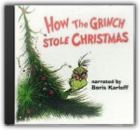




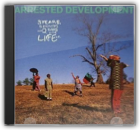

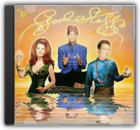

























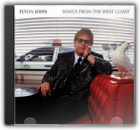


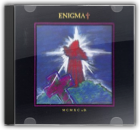
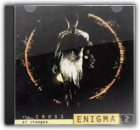

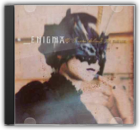


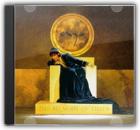


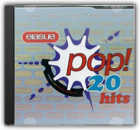

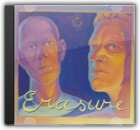






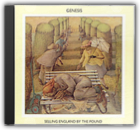




















































































 Made with Delicious Library